Nomadic Studio Logistics: Food, Water, & Power
Managing essentials while overlanding to remote plein air locations. This covers the off-grid logistics required to support a nomadic art studio while painting on-site for weeks at a time.
Water
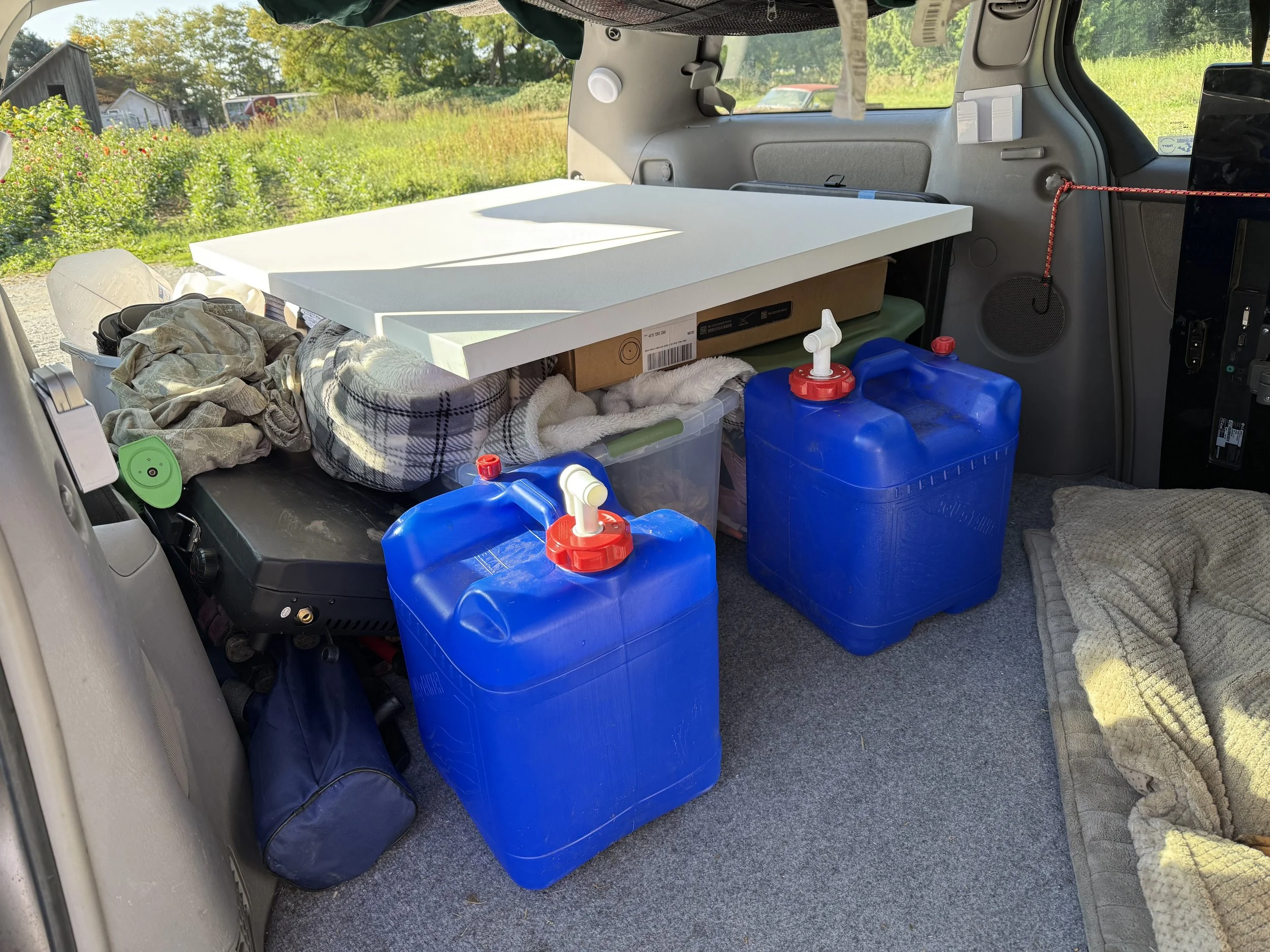
Water is the most straightforward subject. It’s absolutely essential—more so than food. You need it for drinking, cleaning, and cooking. In general, expect to use about one gallon of water per person per day for all combined tasks. You can save a lot by using stream or river water to pre-wash dishes, but one gallon per person is still a solid estimate—add more if it’s very hot.
The easiest storage method is plastic containers of whatever size works for you. Keep in mind that water weighs roughly 8 pounds per gallon, so choose containers you can realistically lift and move around. Also think about how water storage fits inside your vehicle—where it sits, how easy it is to access, and how it interacts with the layout.
Pulling water out of the vehicle is generally the easiest approach. You can build a dedicated sink system, but that reduces flexibility inside your setup. With this simple method, you’re usually working with gravity-fed, cold water. Once you start thinking about having a sink, toilet, or shower, you need a completely different setup with black water, grey water, and actual plumbing.
If you want warm or pressurized water, you’ll need a power source like a battery or heater.
Water usage also depends on what you cook. Foods like pasta, rice, soups, stews, and drinks like coffee or tea can significantly increase daily water use.
Food
Food is almost as important as water, but it’s far more complicated. Start by thinking about what foods you want to bring, then consider storage, and finally how food ties into power and water.
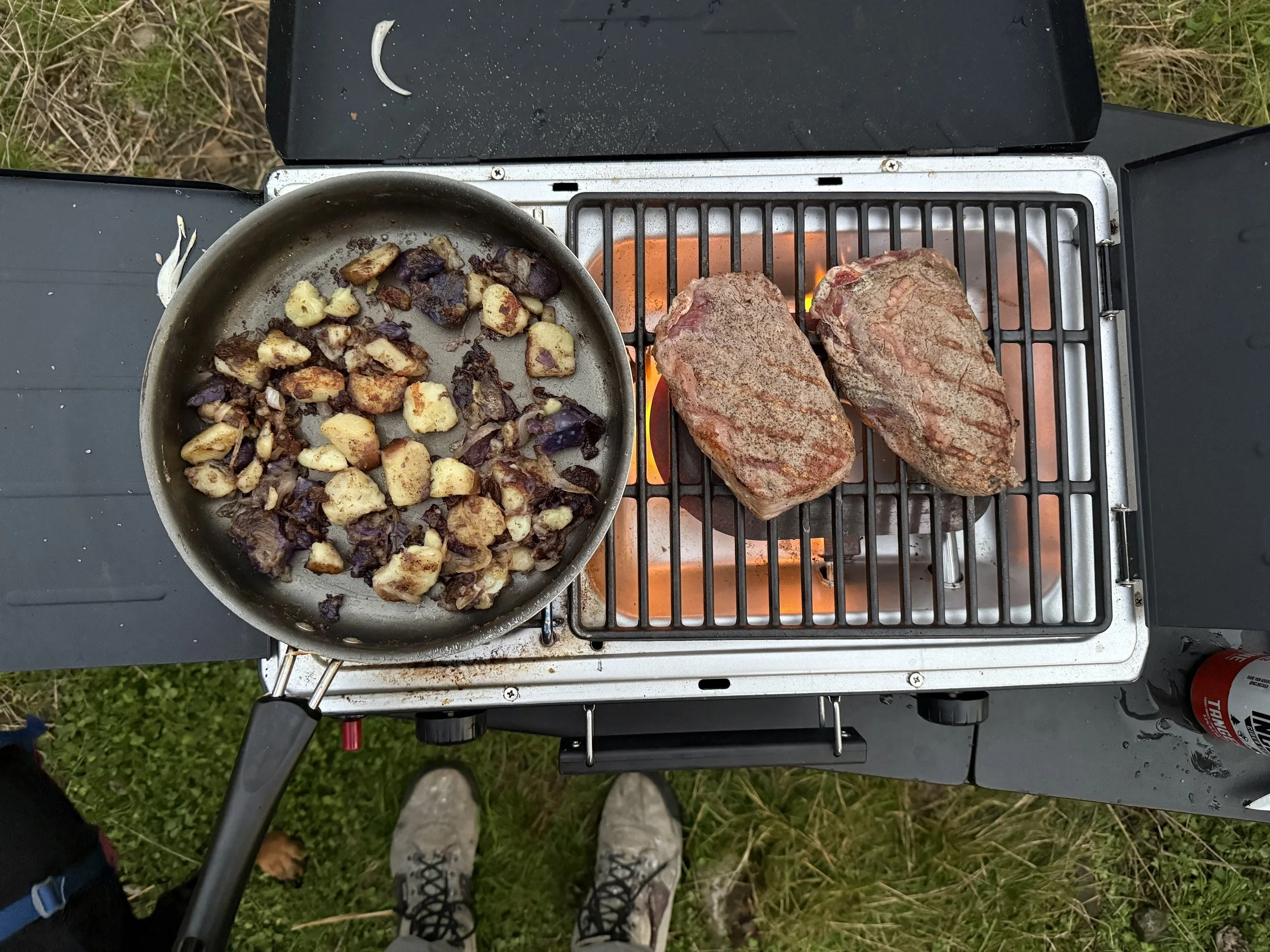
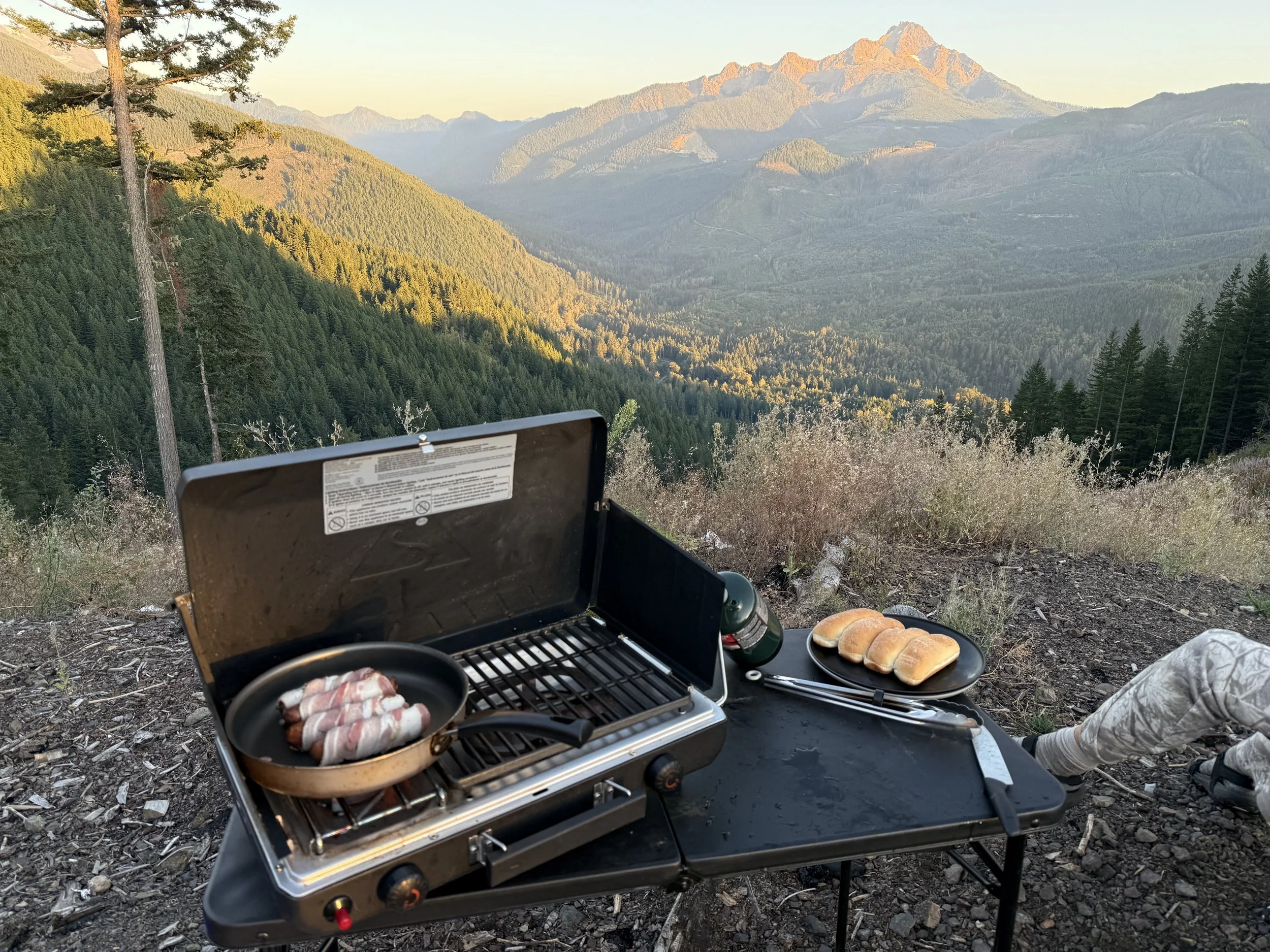
Most people want to keep costs low, and cooking is the cheapest option—but it requires equipment, space, and planning. If you struggle to cook at home, camping won’t magically make it easier. You are essentially creating a mobile kitchen in the woods.
You need:
A cooking source (electric, propane, or fire)
Space to prep ingredients
A surface to set tools and food on
Storage inside the vehicle for dishes, spices, sauces, and utensils
You can get by on the bare minimum—ramen, hotdogs, canned food—but if you like real meals, it gets more complex.
Your fridge/freezer situation is also important. You can avoid bringing refrigerated food, but meat, cheese, and cold drinks are hard to give up.
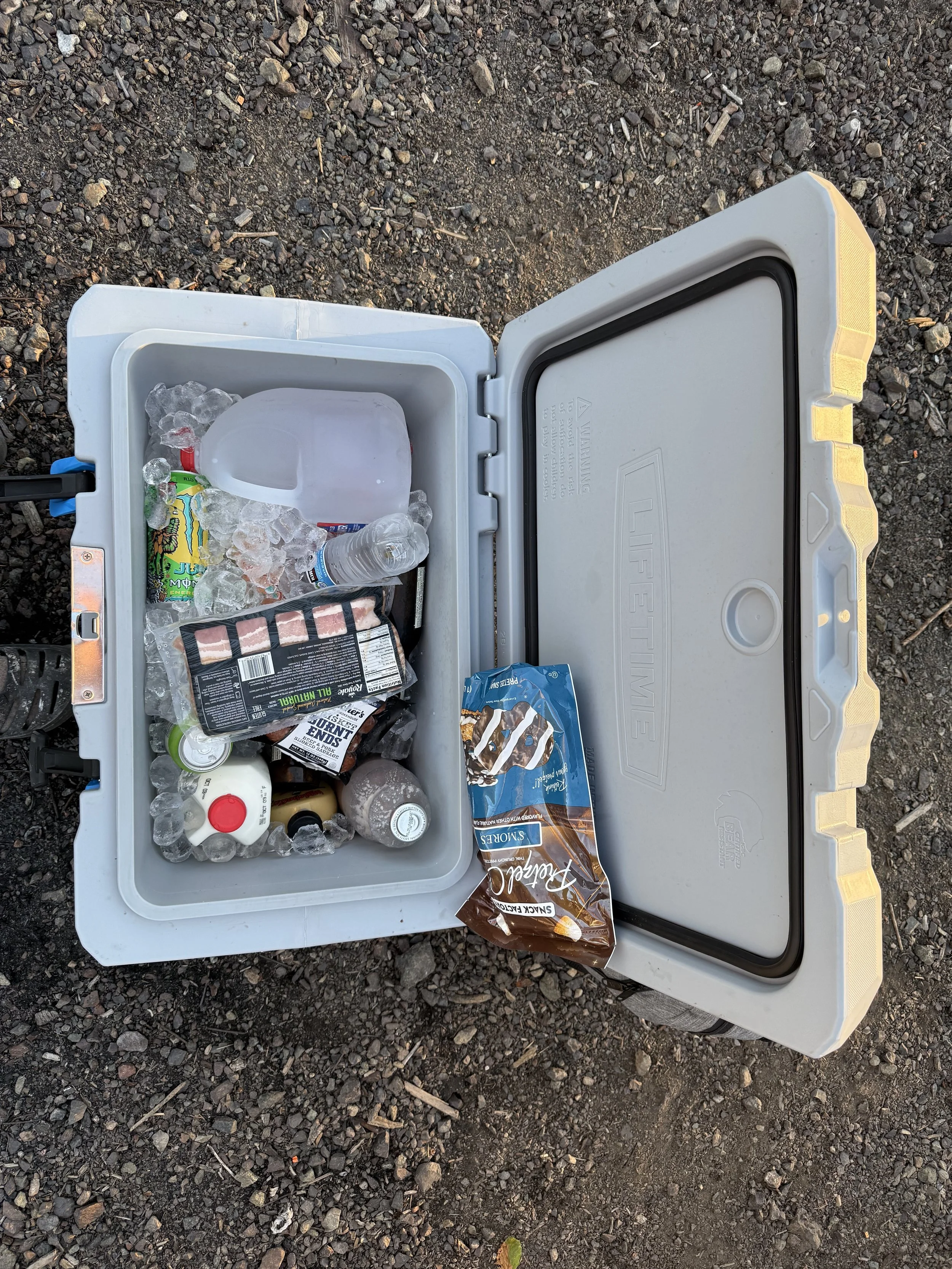
I personally use a 55-quart ice cooler. For under $100, it holds a lot and lasts up to 7 days in normal temperatures (longer in winter). Electric coolers are great, but the cost-to-size ratio isn’t ideal. At the time, I was camping with my girlfriend and needed a week’s worth of food for two people, so the cooler made sense.
Downsides of an ice chest:
Water gets into things
No temperature control
Always buying ice
Electric fridges solve those issues, but require power—our next topic.
Power
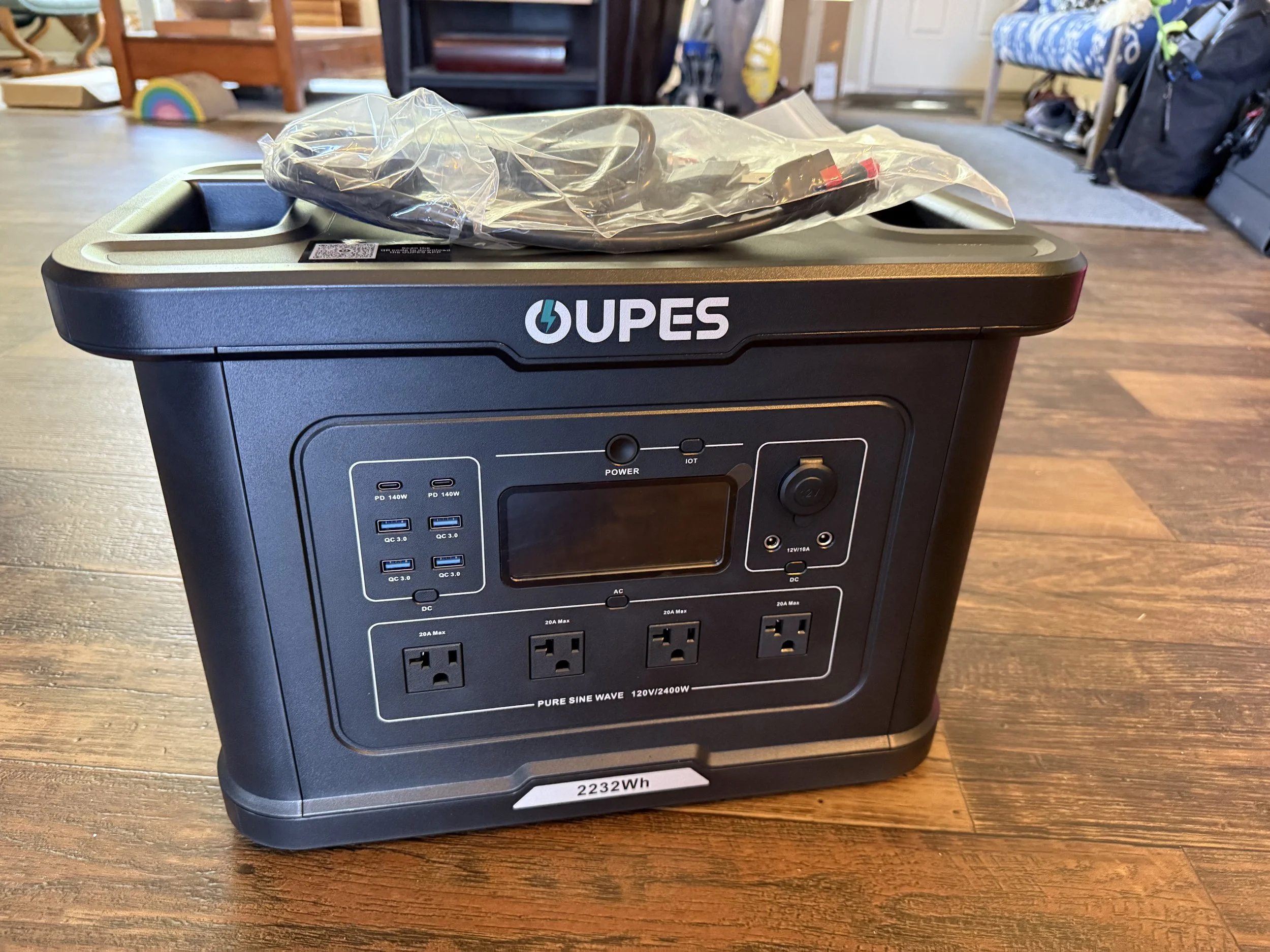
I’ve camped with no power at all, with small batteries, and now with a large 2,500-watt power station + 250 watts of solar.
Portable batteries have gotten much better in the last few years. You no longer need to hard-wire your vehicle—you can simply bring a battery and solar panel. With enough water and food, you could theoretically stay out indefinitely.
Jackery is one of the major brands and very reliable. They’re about $1 per watt, but they often run 40% off sales. Never buy at full price, and avoid used units. Refurbished models are the sweet spot. My 2,500-watt battery with 250 watts of solar cost $750 refurbished, normally over $2,000.
I also bought it as a long-term investment—I use it for more than just camping.
Your battery size depends on what you want to run. I chose to bring:
A TV
Internet
An Xbox
A 34-inch ultrawide monitor
Ridiculous, but fun.
Starlink was the biggest power draw at about 150 watts per hour, but it completely changed the experience—full internet in the middle of nowhere, gaming, movies, communication, everything. Starlink is expensive, but you can pause the subscription, making it perfect for this lifestyle.
Solar
Solar is more complicated than people realize. You will NOT get full wattage unless:
No shadows
No clouds
Perfect angle
Perfect placement
Roof mounting forces you to park in direct sun, which ruins flexibility. Portable panels give you better positioning but require constant adjustment throughout the day. In many states—especially in fall and winter—you’ll get almost no solar production.
My 250-watt panel rarely hit full input.
Generator vs. Solar
I met a full-time BLM/DNR camper on the Olympic Peninsula who explained the ideal setup:
A mid-size battery (1000–1500w) + a small generator
A generator is simply better in almost every way:
1/3 to 1/4 of a tank can fully charge your battery
Far less frustration
Works in any weather
Works in any forest
Allows cooking appliances like crockpots, rice cookers, etc.
Lets you run Starlink all day
Solar feels “green” and cool, but generators are more consistent, especially for long-term camping.