Recent Plein-Air Landscape Paintings
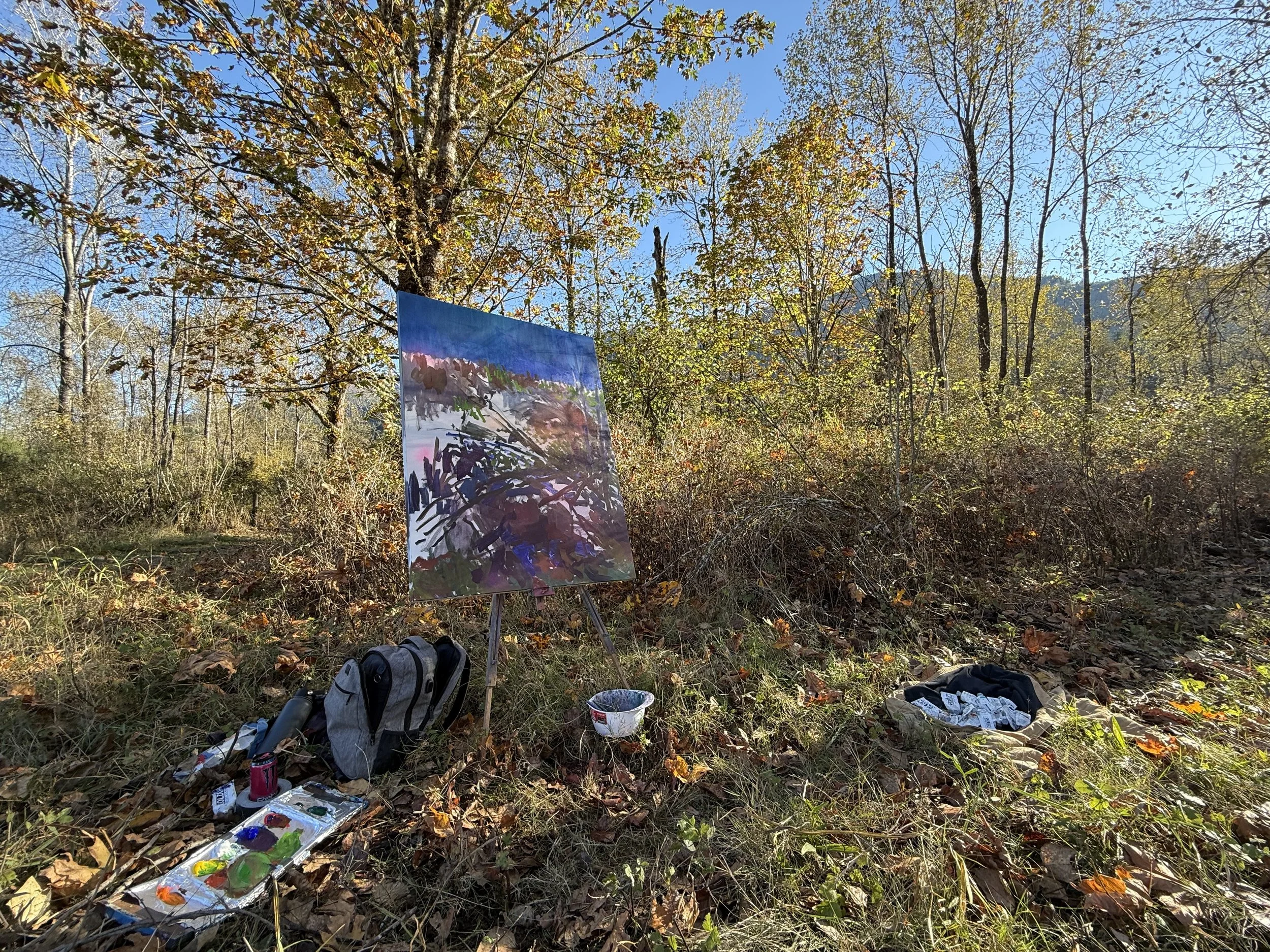
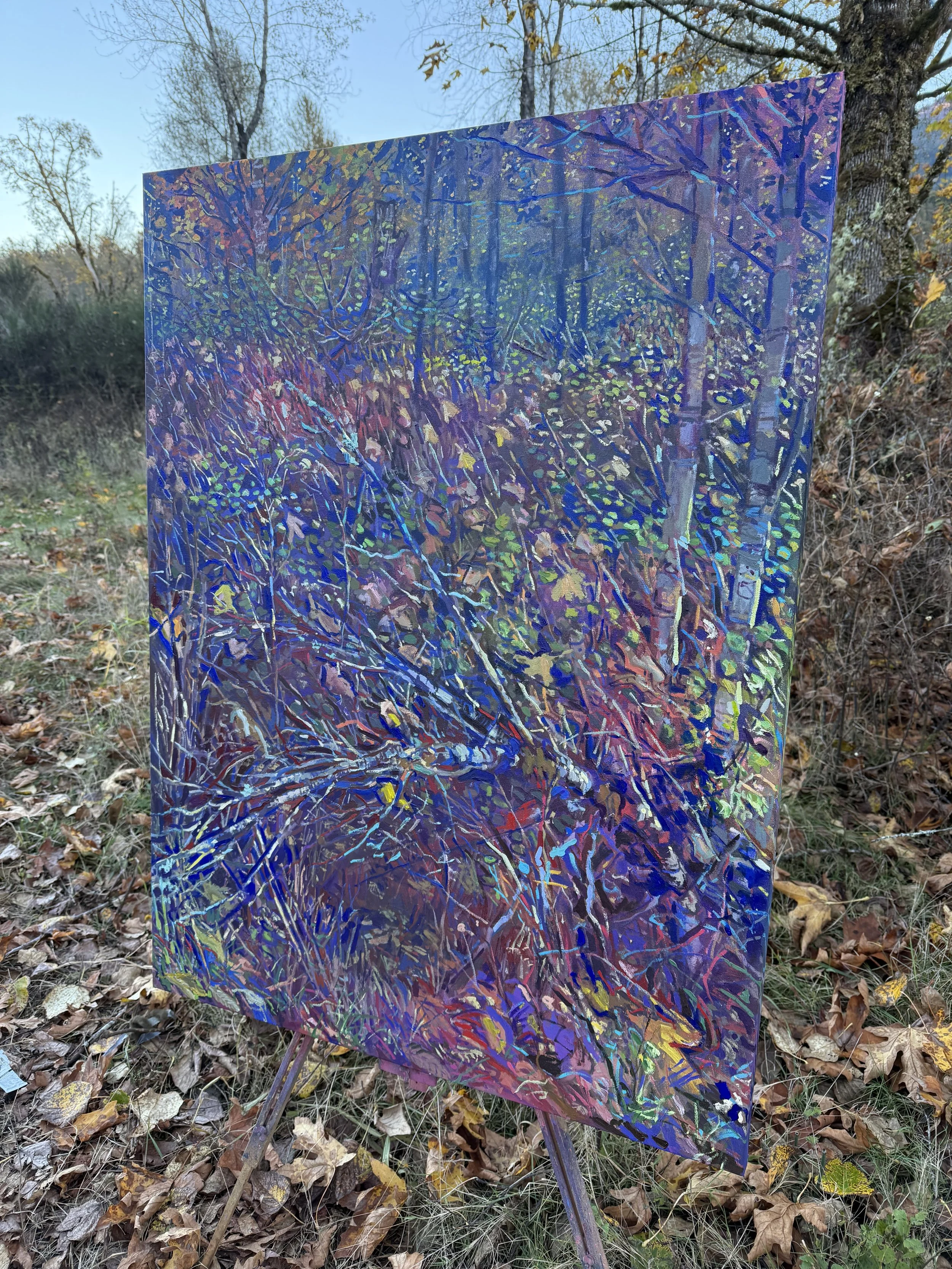
Razar Park 3, Skagit Valley, Washington
3 × 4 ft · Acrylic and Spray Paint on Canvas
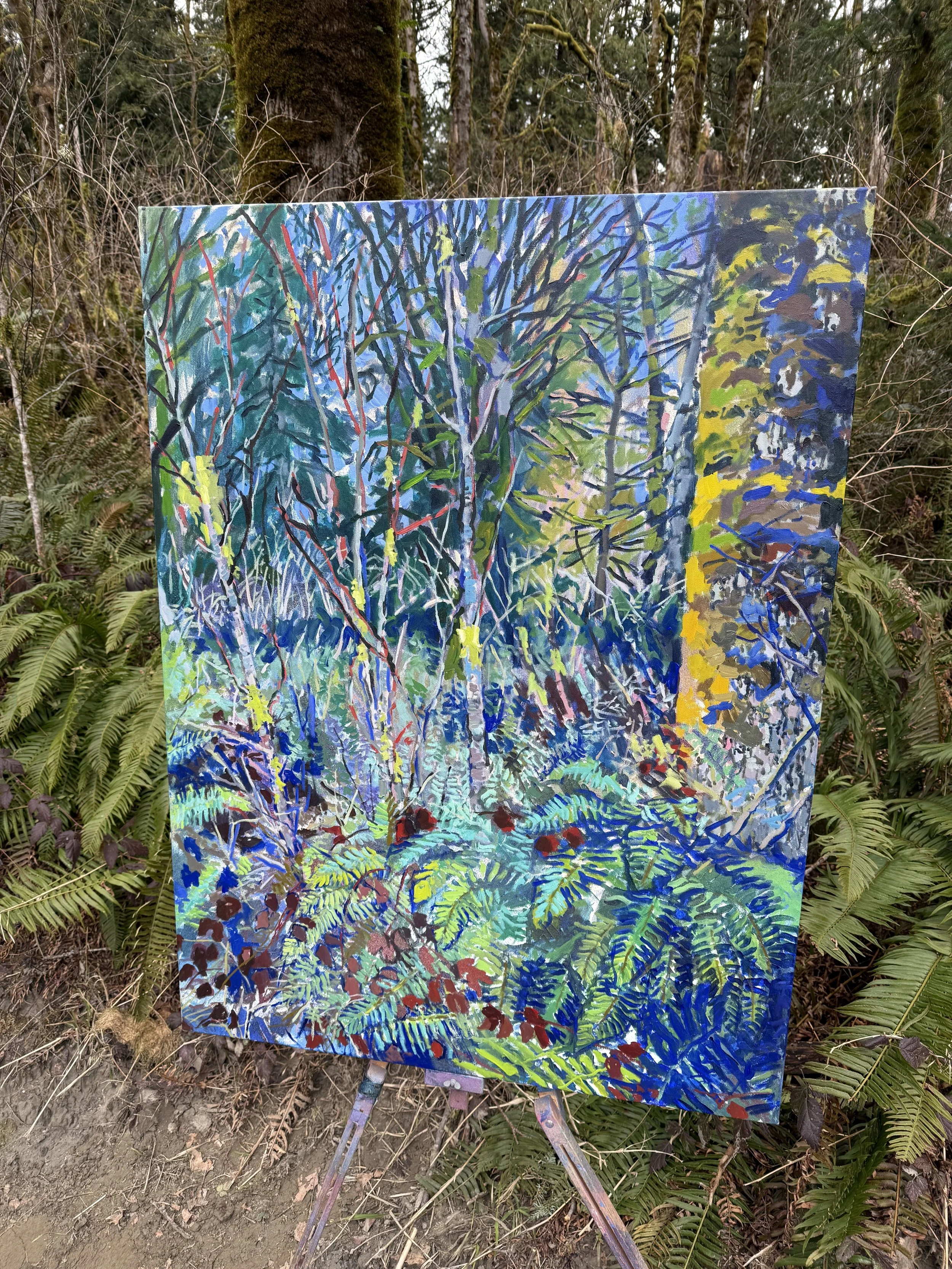
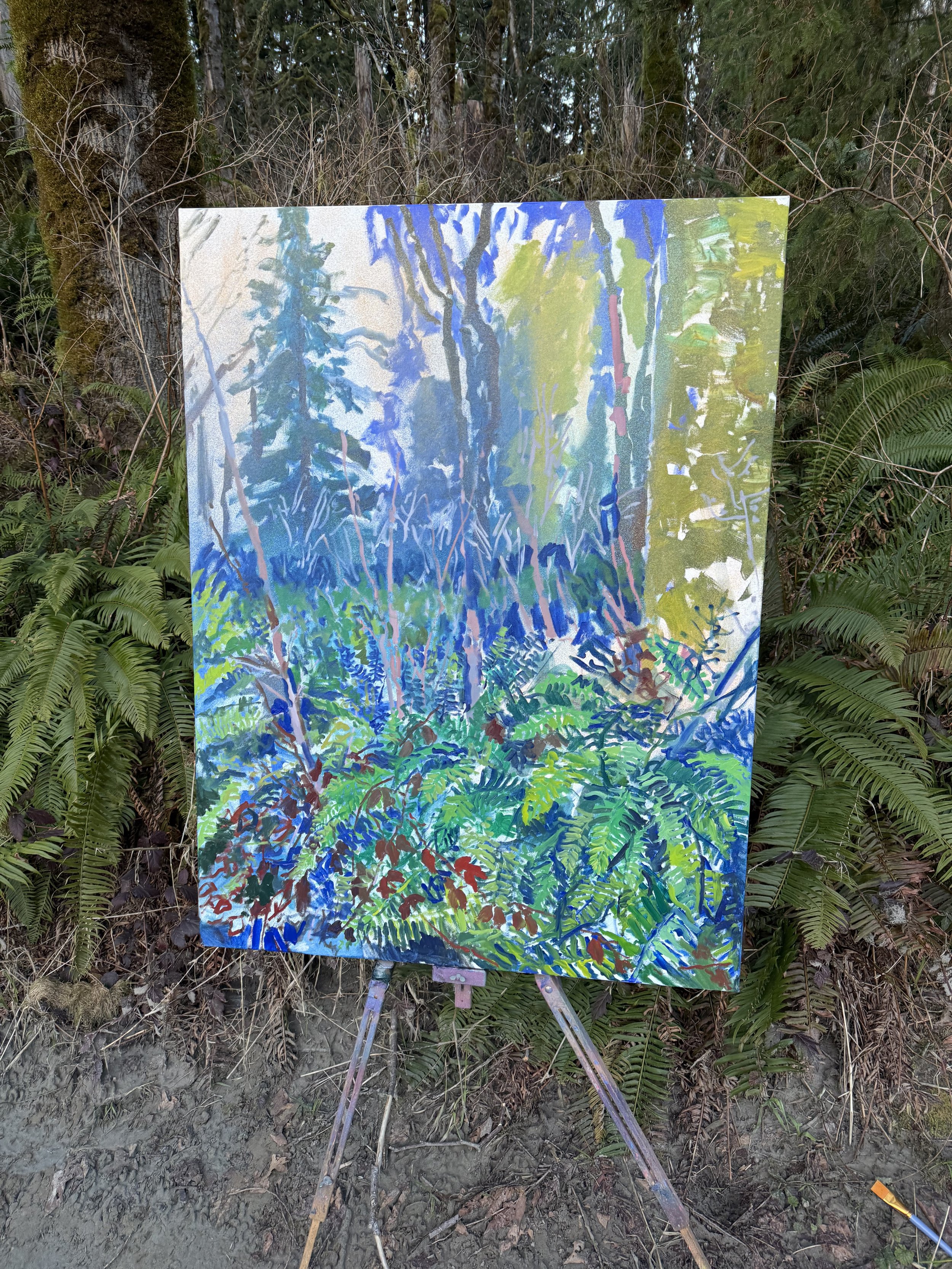
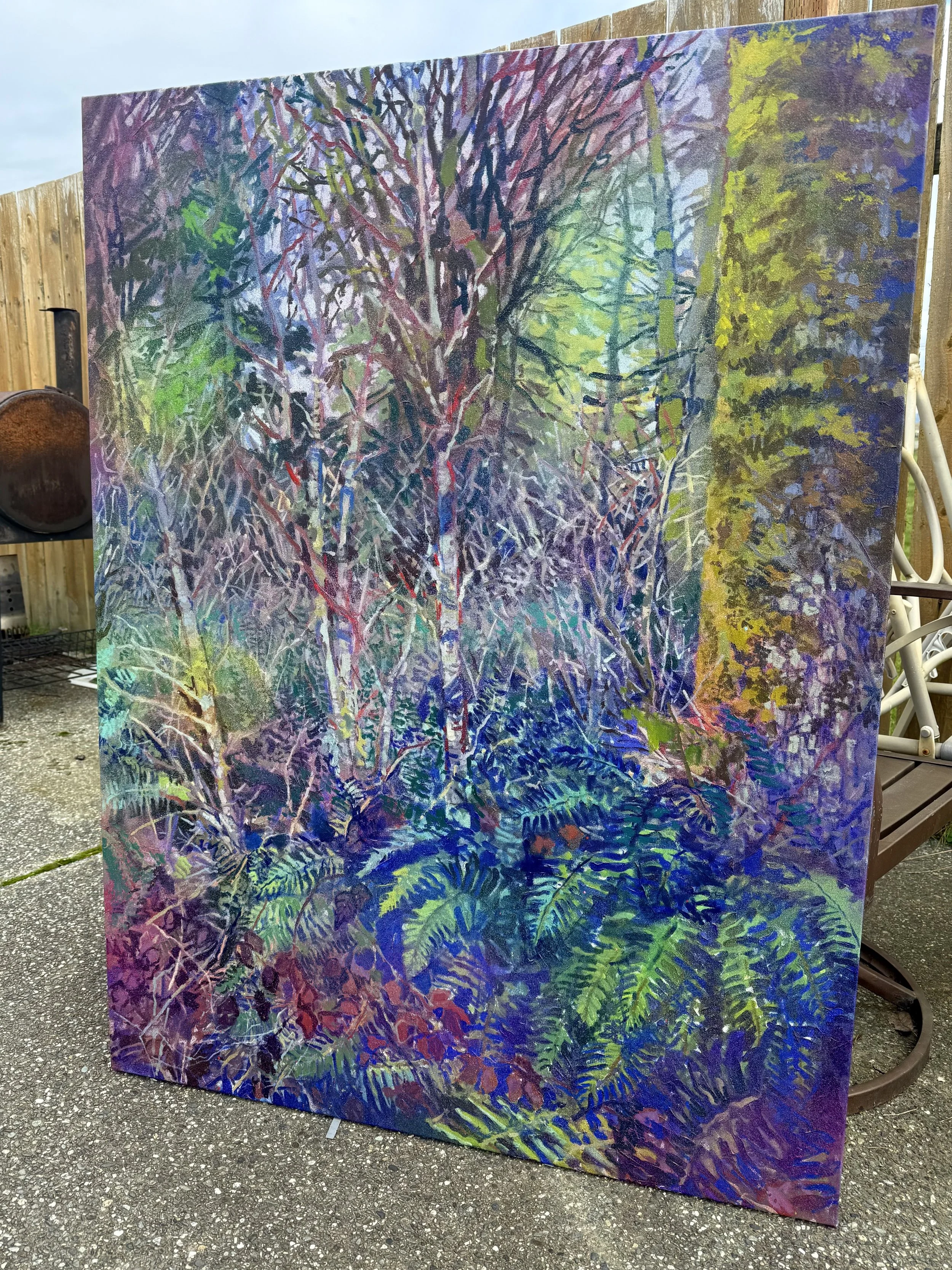
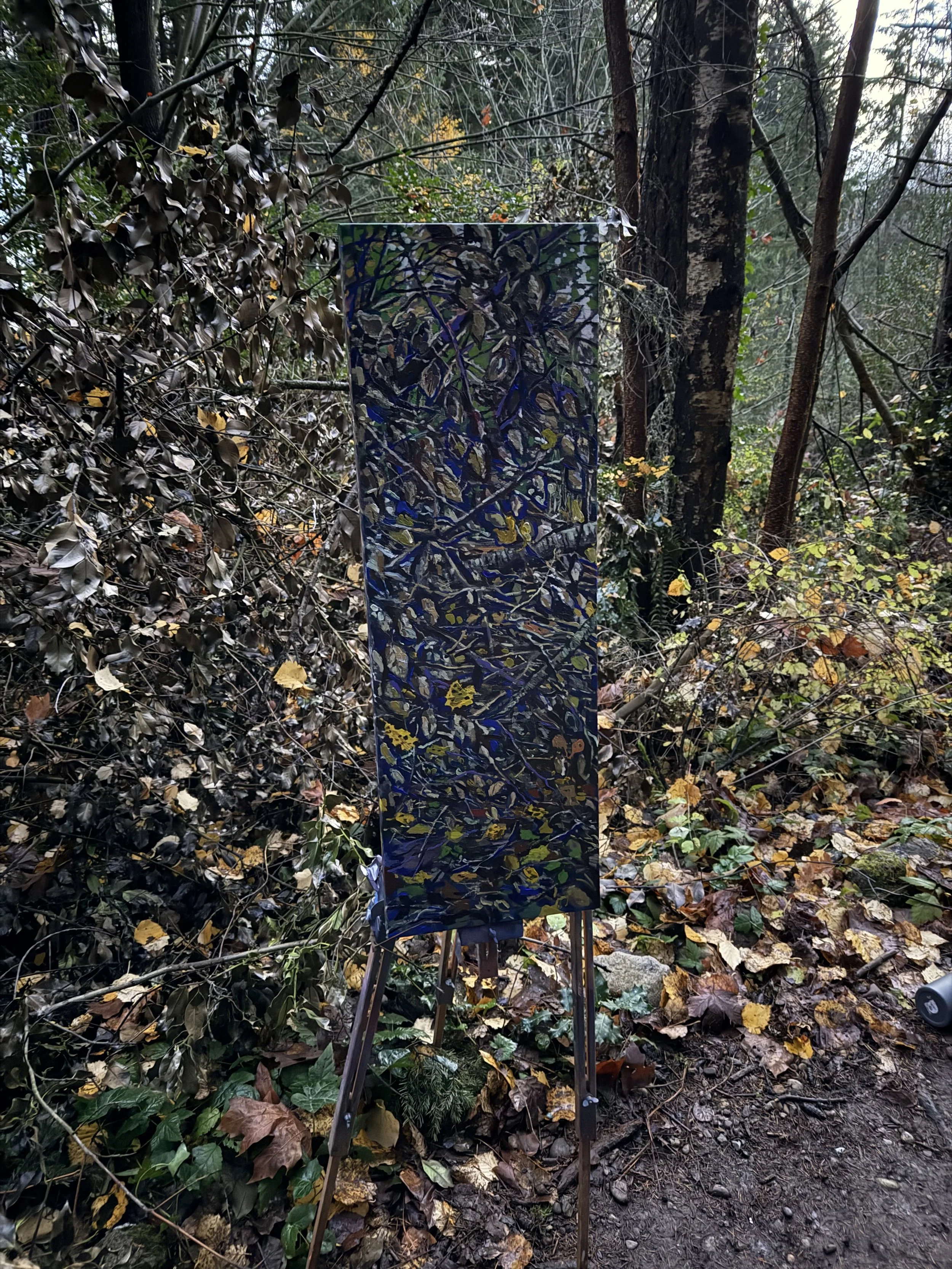
When something works, you don’t change it. The struggle of the previous piece paid off by allowing me to turn around from that painting and find the inspiration I was searching for. I decided to return to a larger format at 3 x 4 feet. The density and complexity of the environment demanded it — and honestly, I’d like to go even bigger.
This setting almost perfectly encapsulates the visual language I’m chasing: an established color palette, layered and complex, with a strong push and pull between the recognizable and the abstract. It’s the kind of imagery that makes your eyes flutter because there’s no obvious place to rest.
Although I’m only about halfway finished, the structure of the piece has me excited. It sits somewhere between graphic and natural. I’ll continue pushing and reinforcing color and texture across multiple layers, deepening the sense of space and complexity — driving home the feeling that you’re somewhere lost in nature with me.,
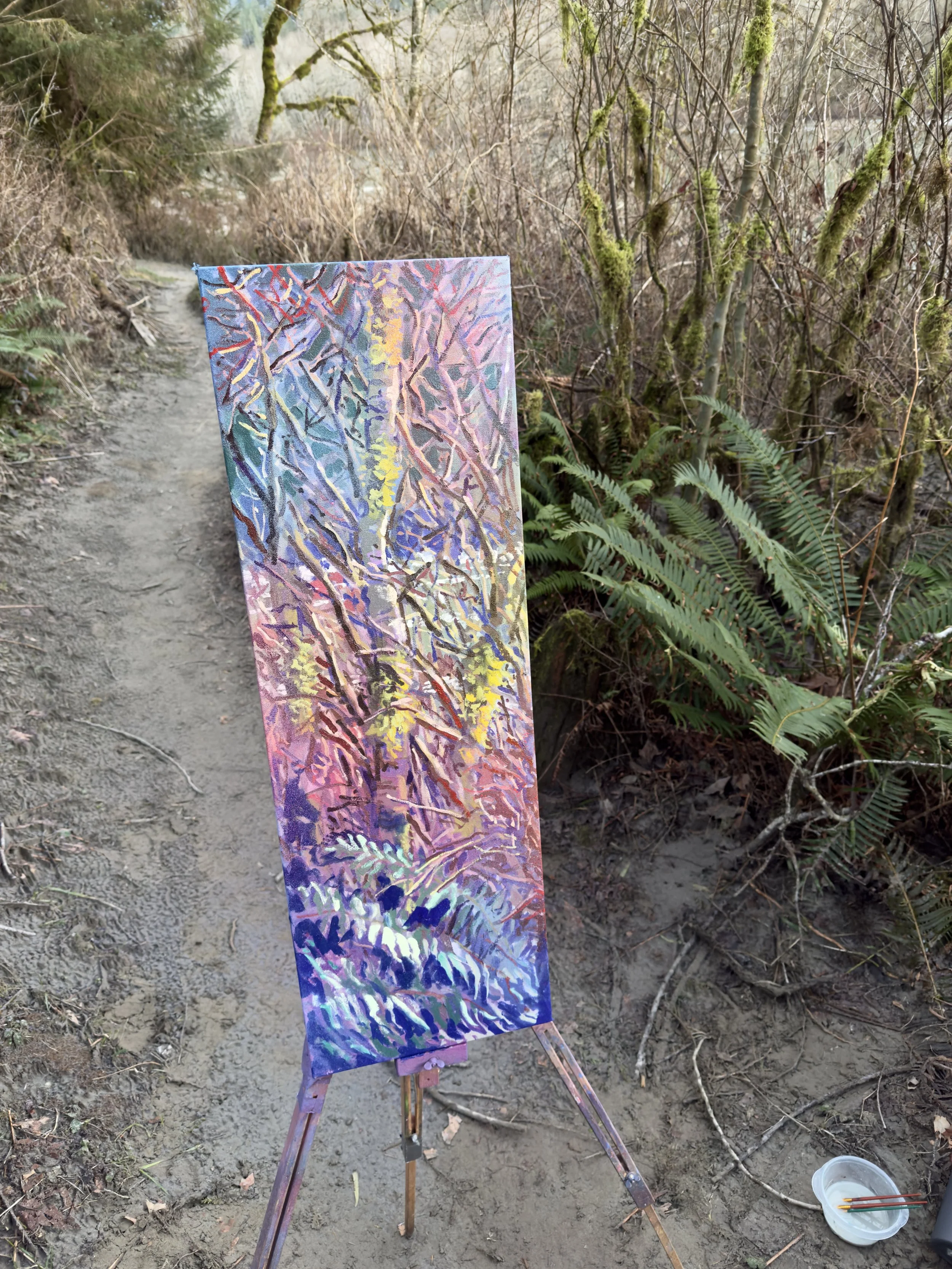
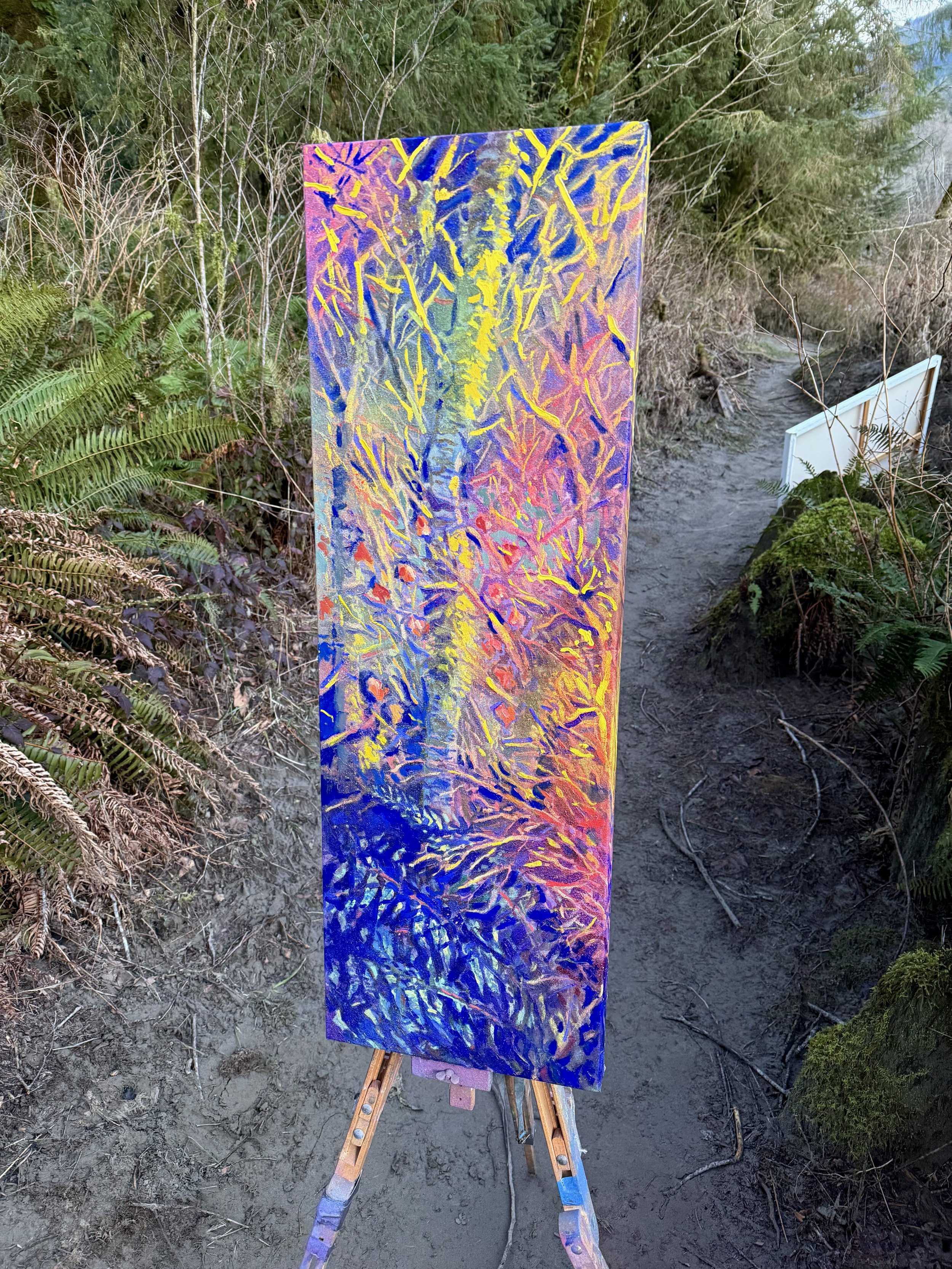
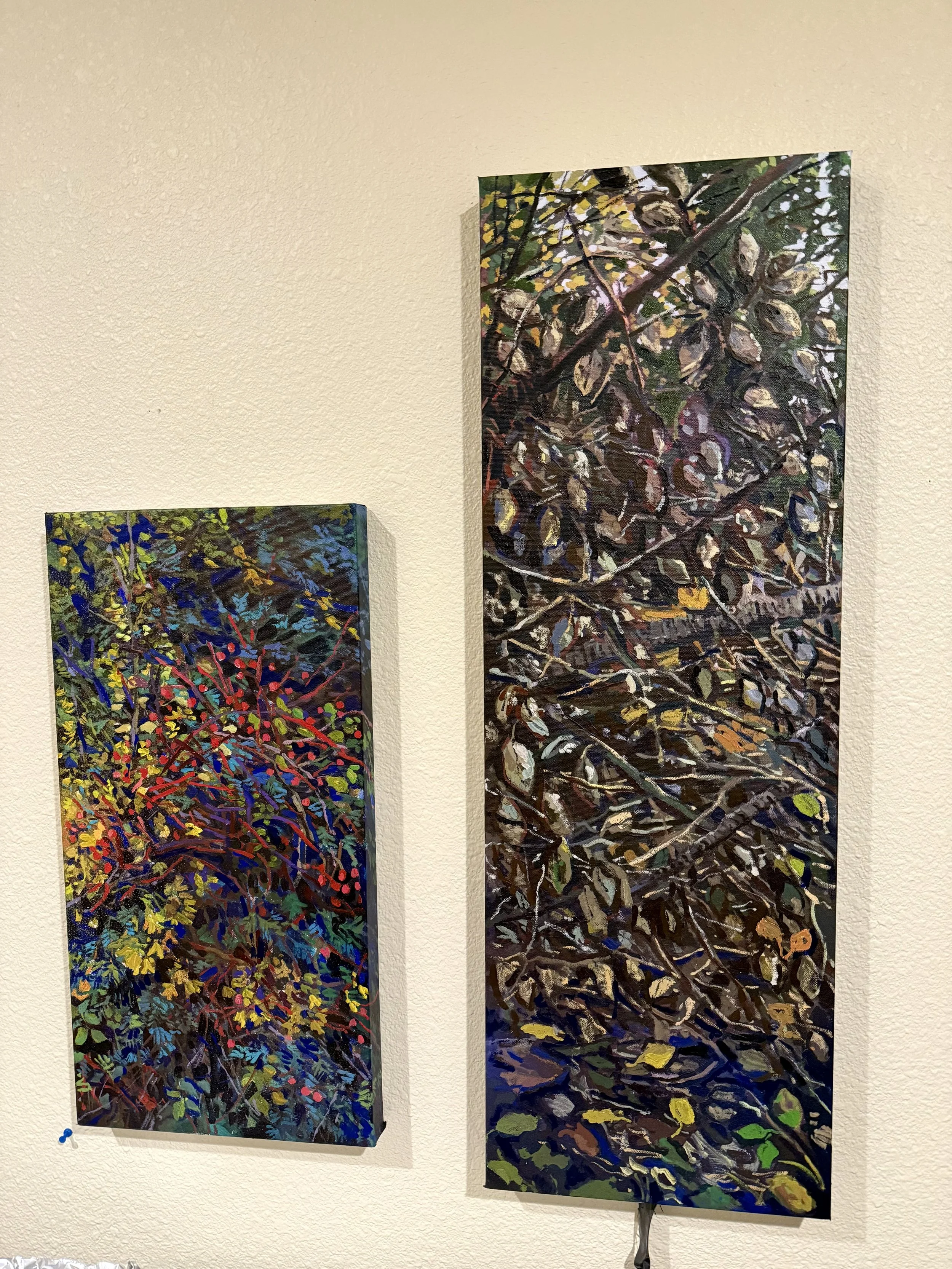
Razar Park 2, Skagit Valley, Washington
1 x 3 ft · Acrylic and Spray Paint on Canvas
A long 3 day slog to find a place for this piece. At least 5 different parks visited across 3 days, multiple hours hiking, contemplating and considering. I knew what I was looking for, and it wasent at any of these places. It’s funny you’d consider the Washington landscape pretty similar, but 30 min distance feels like a differnt world. A decision to go back to razar park was the best division I could made. While the majority of the park is whipped out due to flooding recently, a small portion of the part survived and provided the exact density of texture I was seeking. I choose this thinner 1x3 foot ratio to highlight the density and complexity of the plant life I’m representing. The colors, shapes and composition were all influenced by the previous days searching for a location. Heavy on opacity of color and a striking yellow hue used to highlight the plant life and sun.
Padilla Bay 2, Skagit Valley, Washington
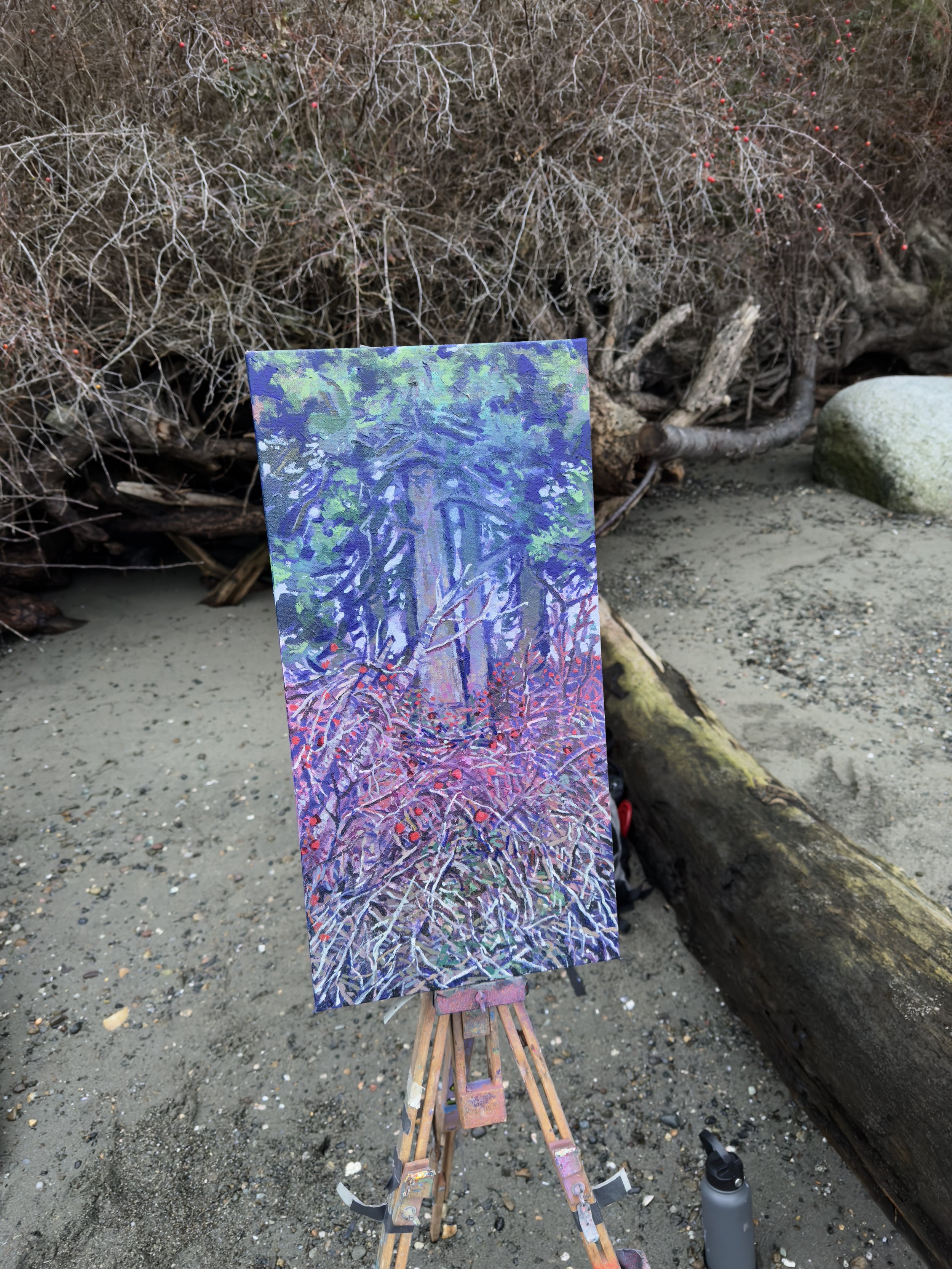
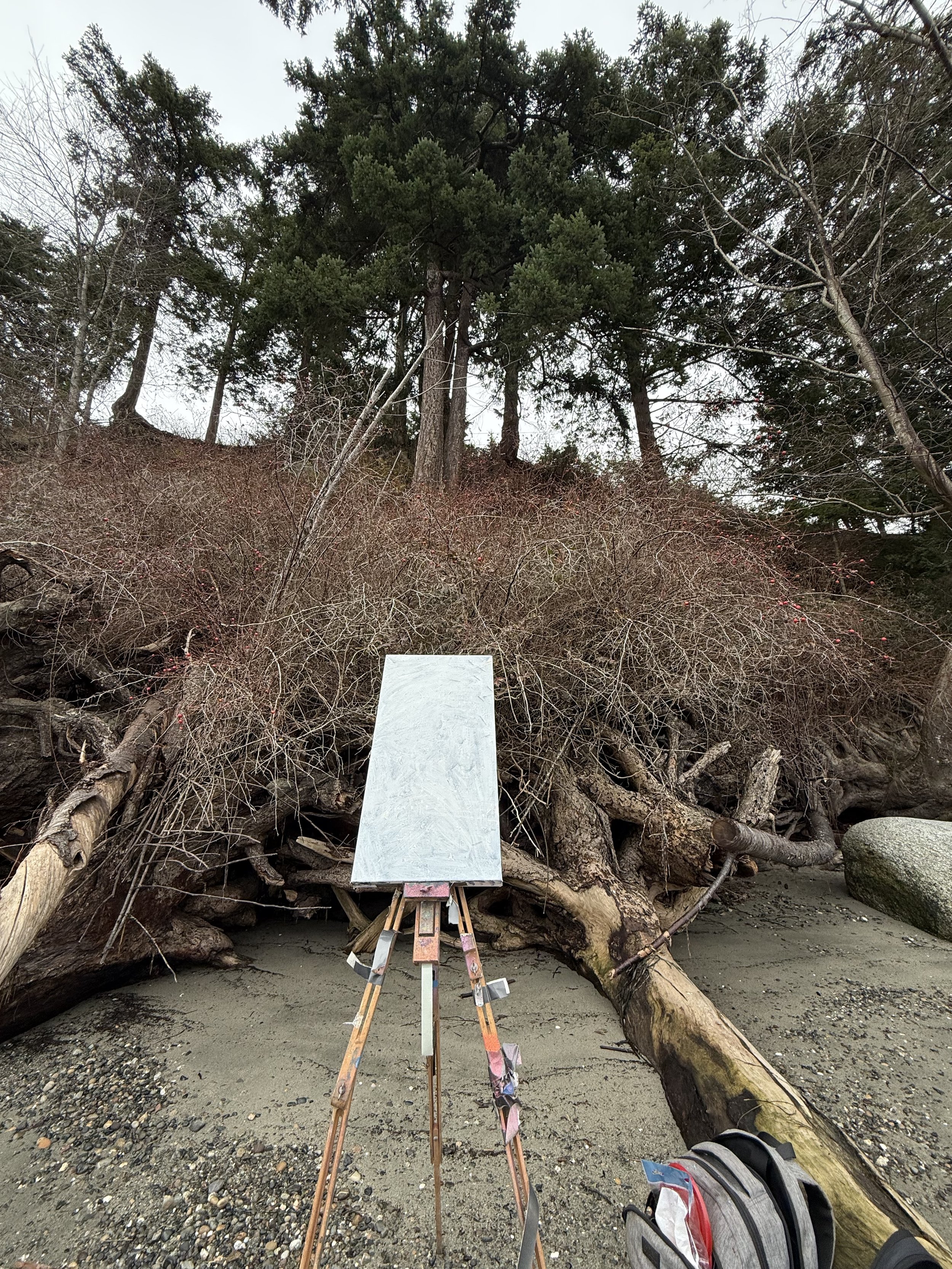
1 x 2 ft · Acrylic and Spray Paint on Canvas
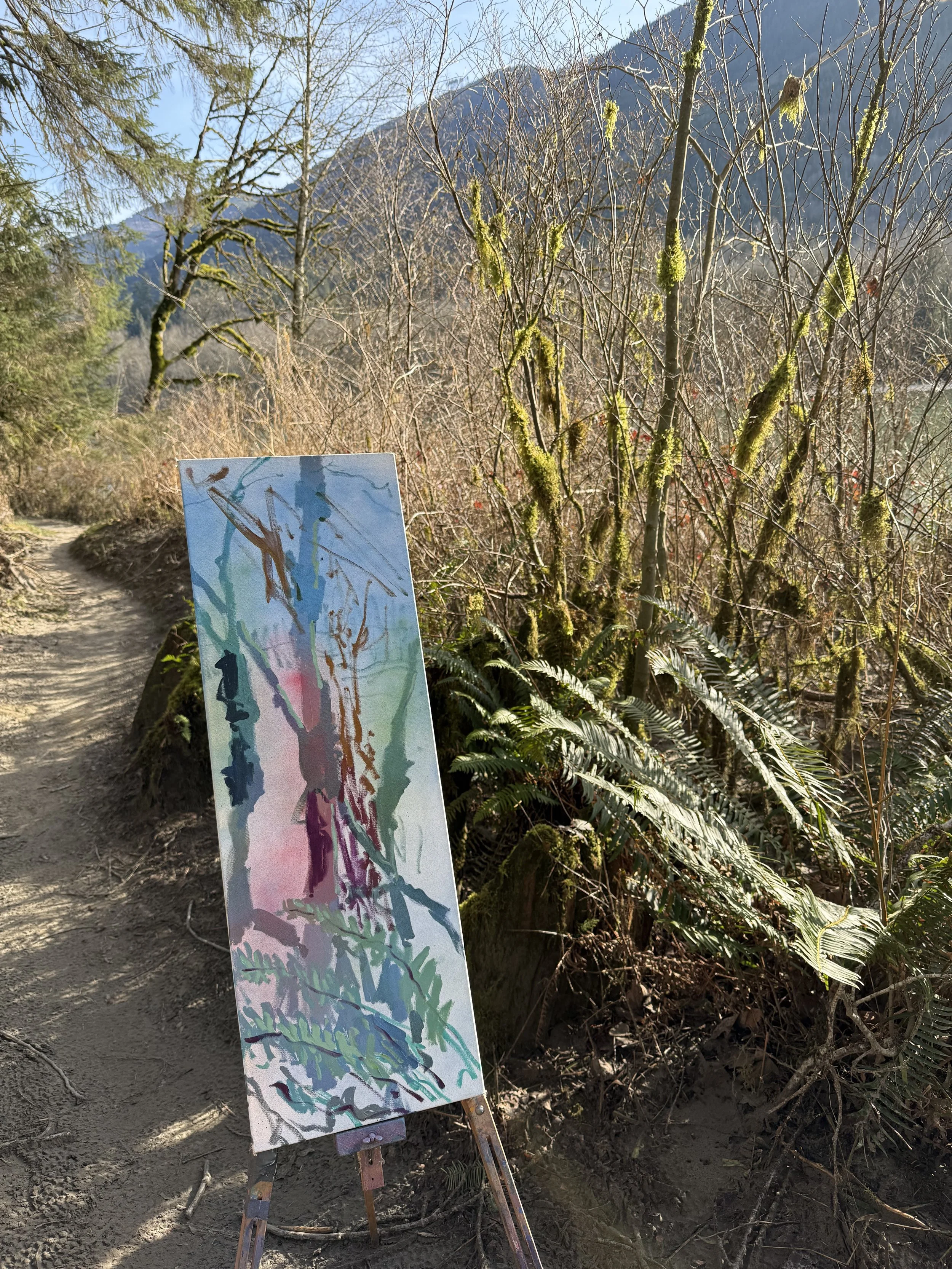
It’s another multi-day piece, but I prefer that. A slight size bump from the previous one, but still small compared to what I’d like. Regardless, getting to work on it and then stepping away for a day is a valuable experience, without the stress of trying to squeeze meaning from just a day of work. I’ll need a third day to complete it, mostly due to the weather not cooperating.
I really am gravitating toward the texture of the winter plants and the subtle transitions of colors from the layering of hundreds of branches. What I’m enjoying playing around with is the perception of a flat surface despite there being a lot of depth—even with the view looking up into the trees versus being on a flat plane—pushing certain features like the tree up and over, but the branches below to roll the opposite direction.
Blue being my favorite color for shadows plays a big part in that idea in this piece, using it to stop your eye, push 3D objects to look 2D, and transition from depth to flat. From a palette perspective, I’m really liking the red and green together; it sings of a specific season here in the PNW. By adding the blues, grays, and browns, it turns from a very Christmas palette into something seasonally specific. I’ll be back soon to finish this one off.
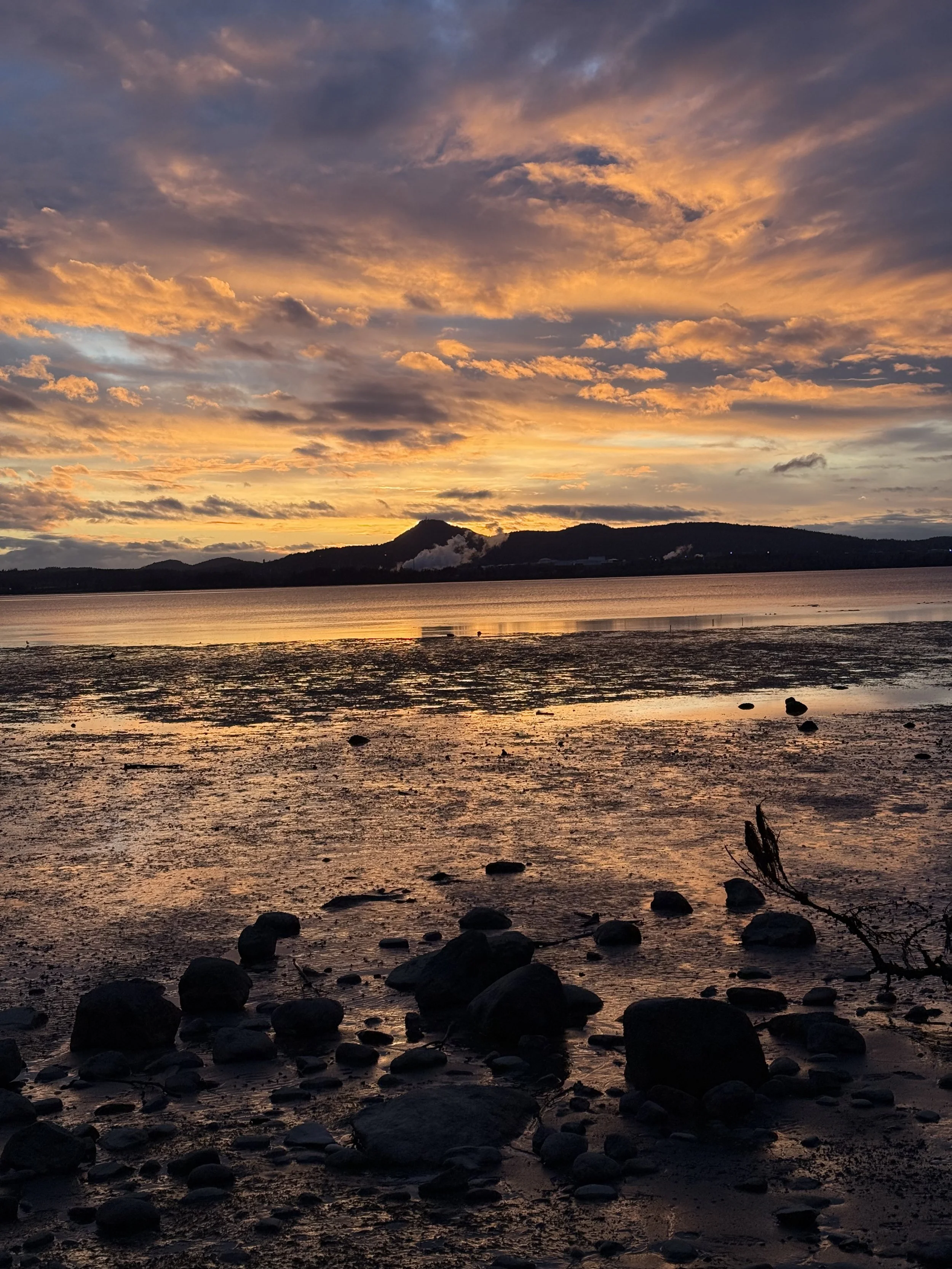
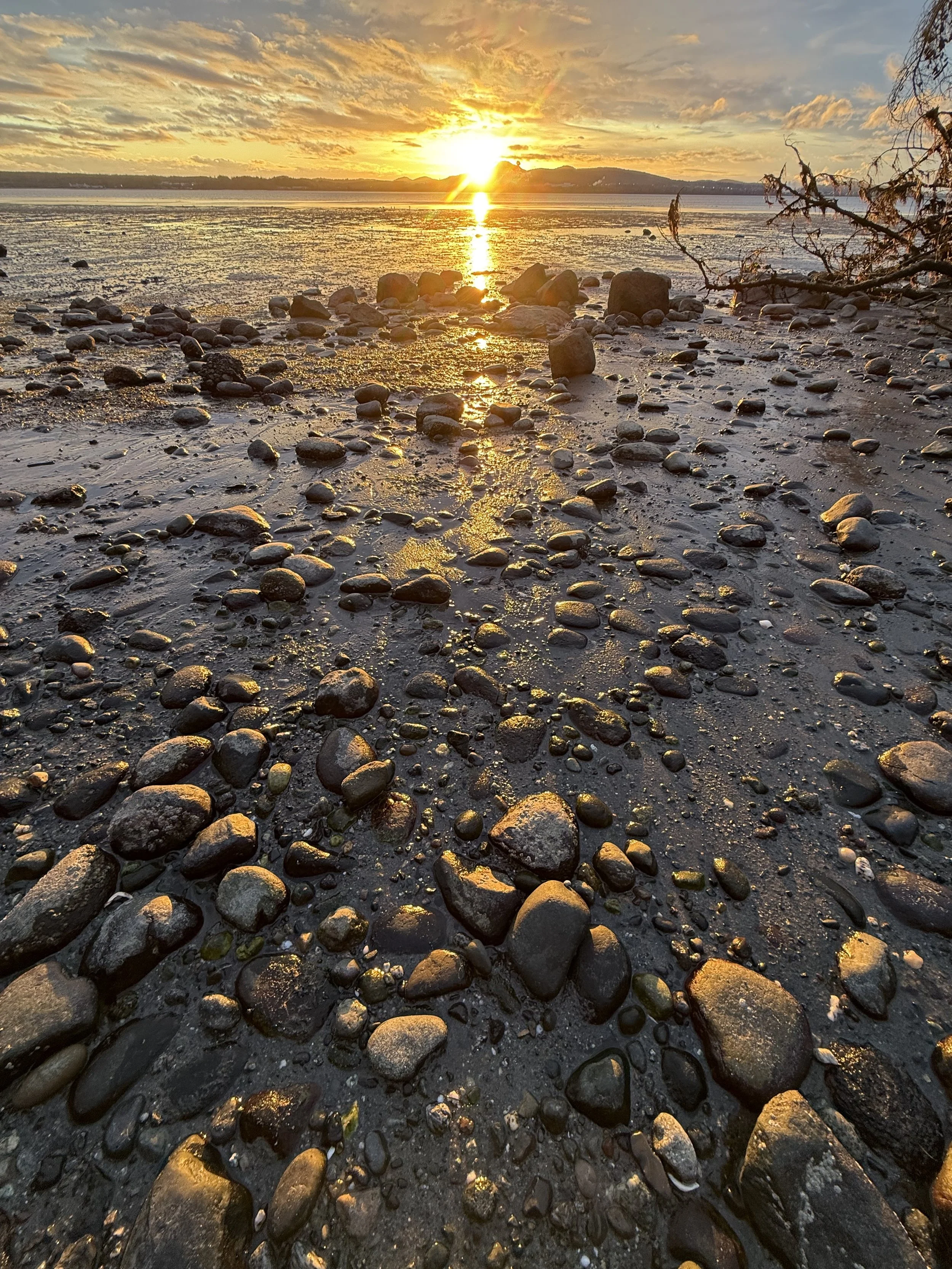
Little Mountain 2, Skagit Valley, Washington
10 x 20 inch · Acrylic and Spray Paint on Canvas
We had a solid two weeks of sun here in Washington, but no more. So, it’s smaller pieces for the meantime. Also, purely from an output perspective, I need a wide range of sizes and prices. As much as I prefer the larger pieces, these smaller ones are still important.
It’s hard not to let my preferences lead my work. It can feel less special, like it requires less effort—smaller art and all that. But it isn't, and sometimes that only becomes clear to me days or weeks later. Sometimes too much pressure is a bad thing, and knowing where the line is isn’t possible until after the fact. Smaller work teaches me there’s something worth finding, even when you don’t think there is.
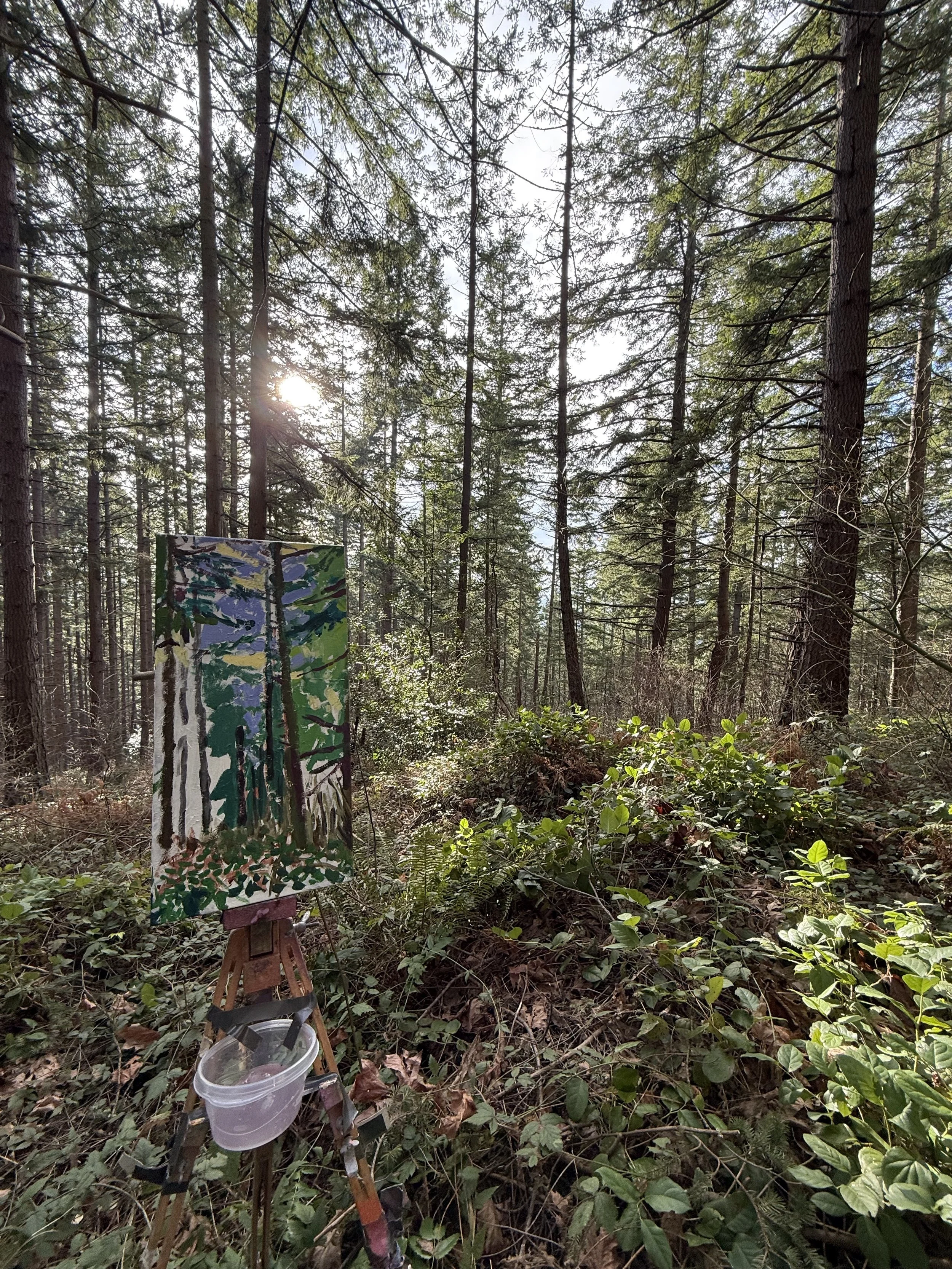
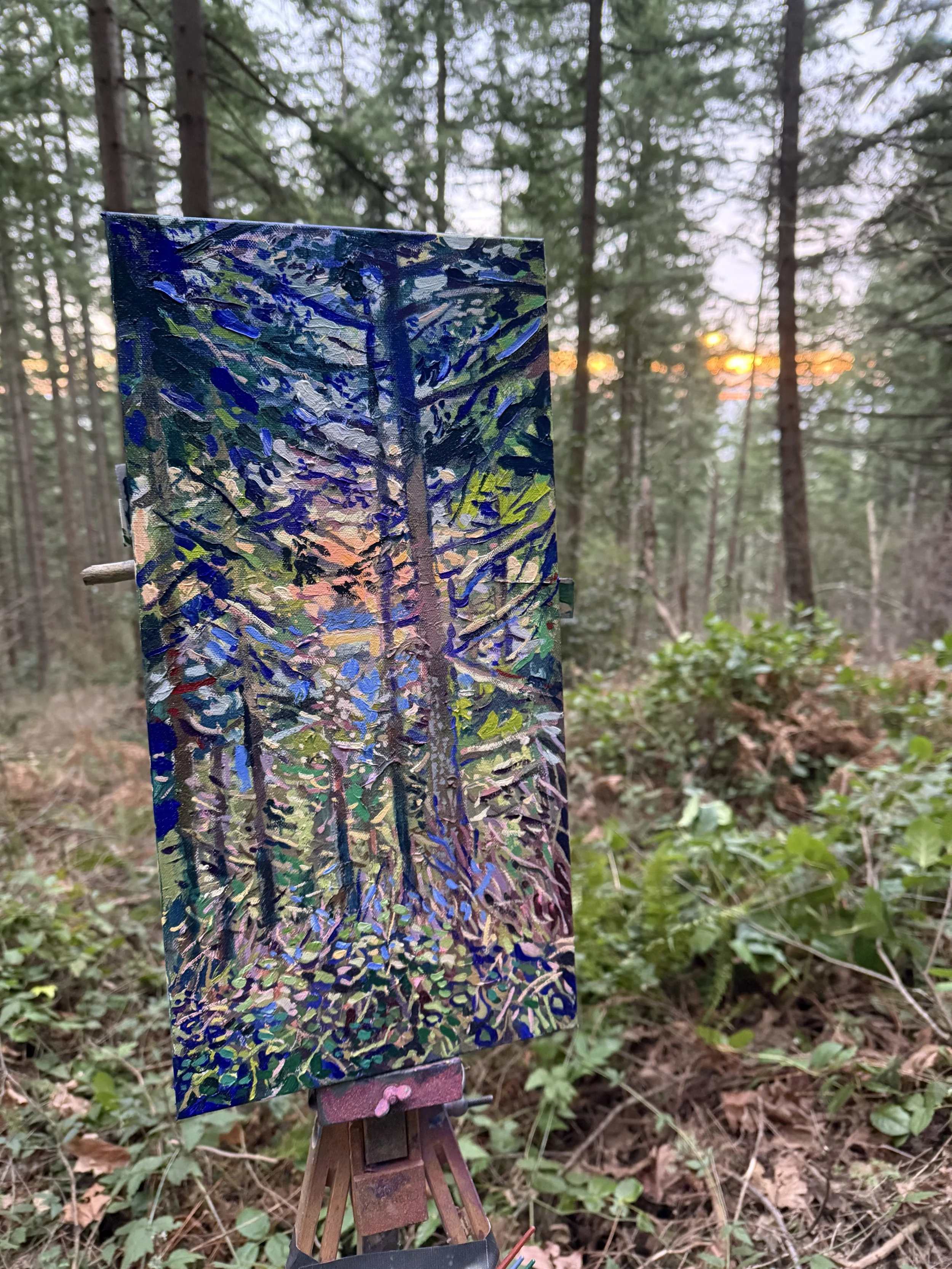
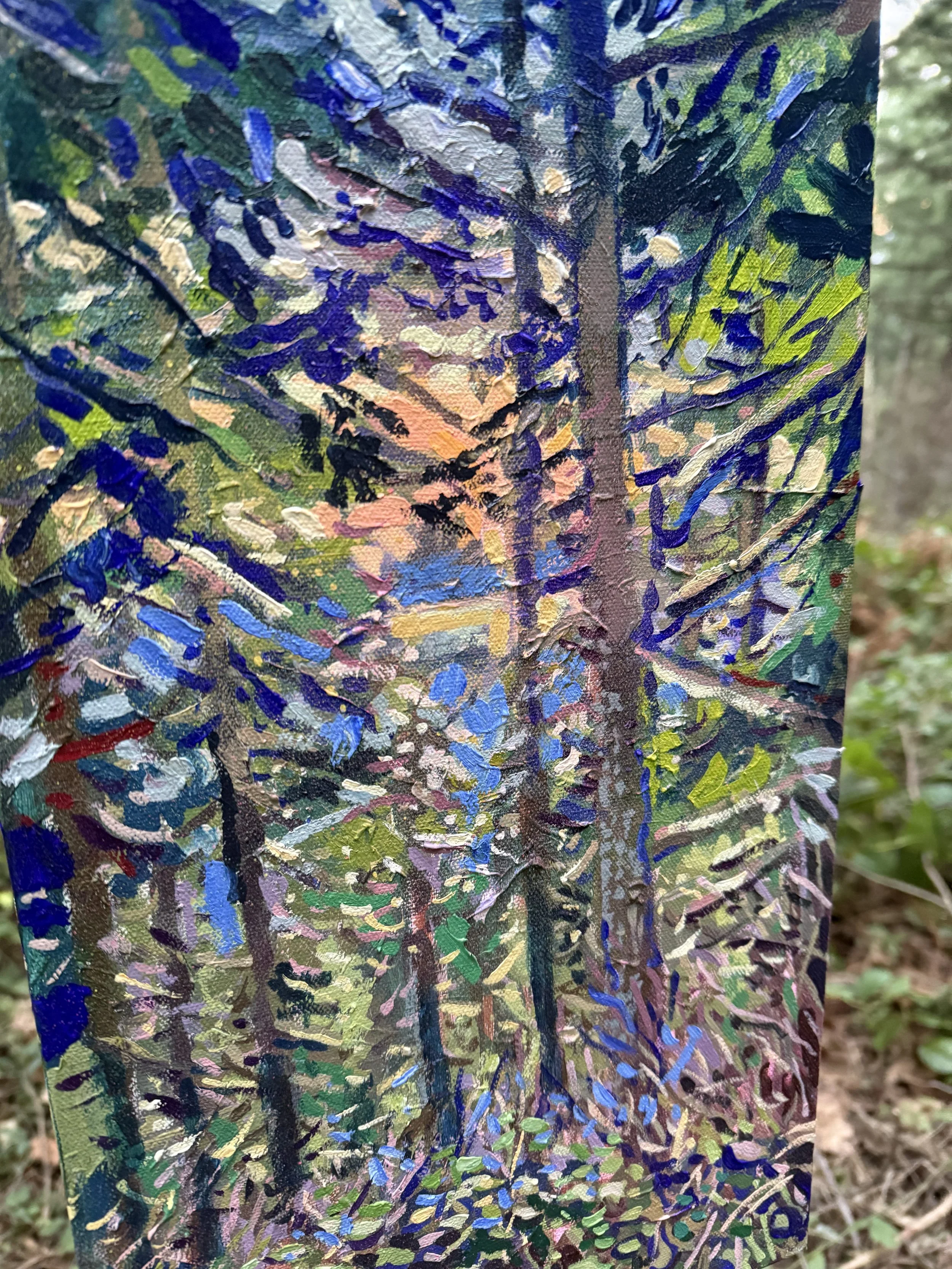
Padilla Bay 3, Skagit Valley, Washington
10 x 20 inch · Acrylic and Spray Paint on Canvas
This is a wonderful spot with a lot of variety right near where I live. I often take it for granted that I live right in the middle of farmland and nature, whereas some people have to drive 30 minutes just to see a landscape like this. Padilla Bay features walking paths, a resource center for ecological education, and beach sections that all interconnect at low tide. Despite the direct sunlight and clear skies, it was still incredibly cold to be out on the beach painting.
This 2x1 foot size is about as small as I can go with my current technique for a few reasons. Detail is a vital part of my work, and the density I wish to express becomes more difficult to capture as the surface area decreases. Combined with the spray paint applications, this smaller scale doesn’t offer the same visual impact as my larger pieces; I need more space for the eye to move around. Regardless, as I have said before, painting something is better than waiting for the "perfect" subject. I am entering a period in my career where a consistent output of work is essential—a task that is already challenging enough as a plein air artist.
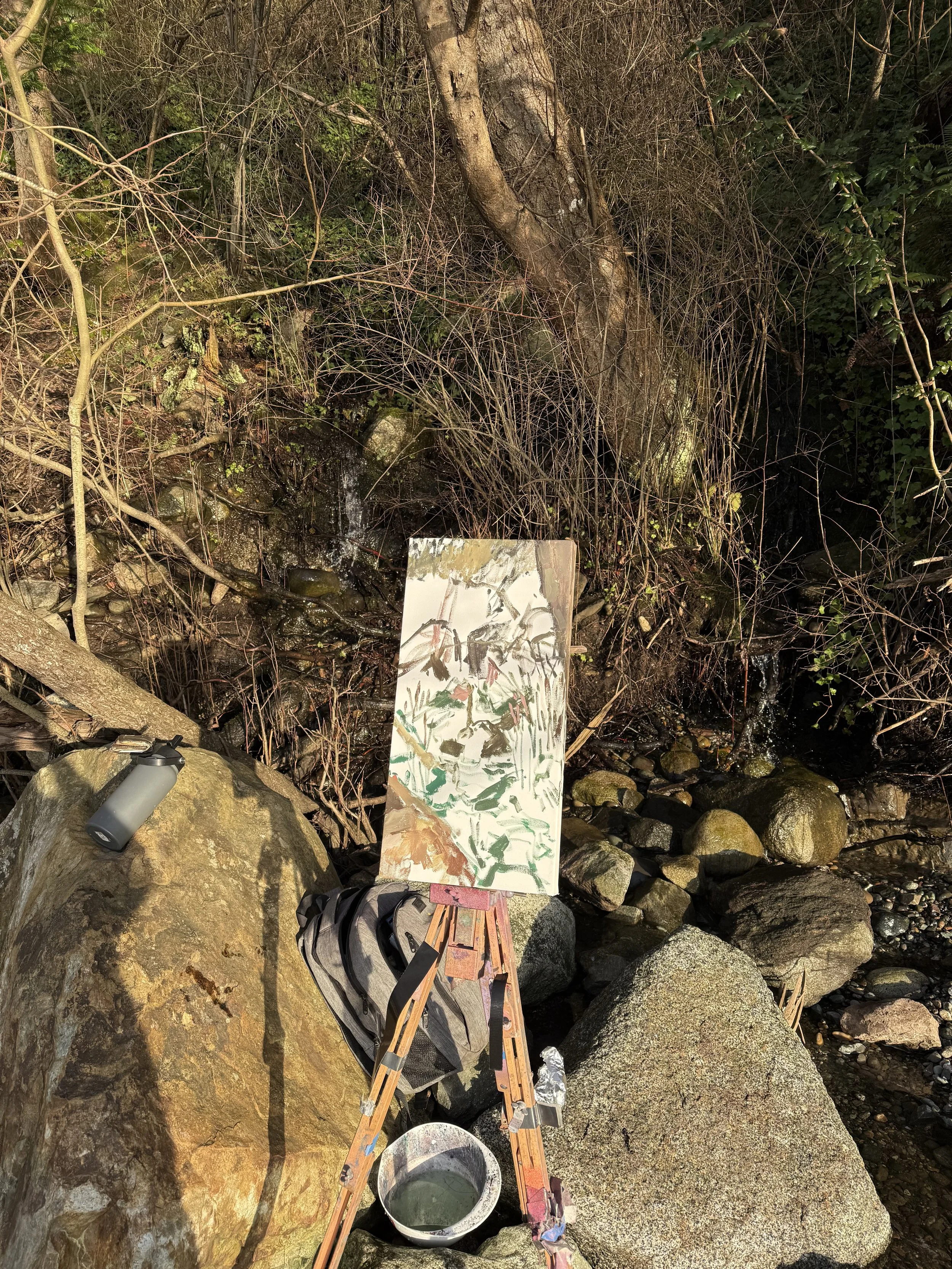
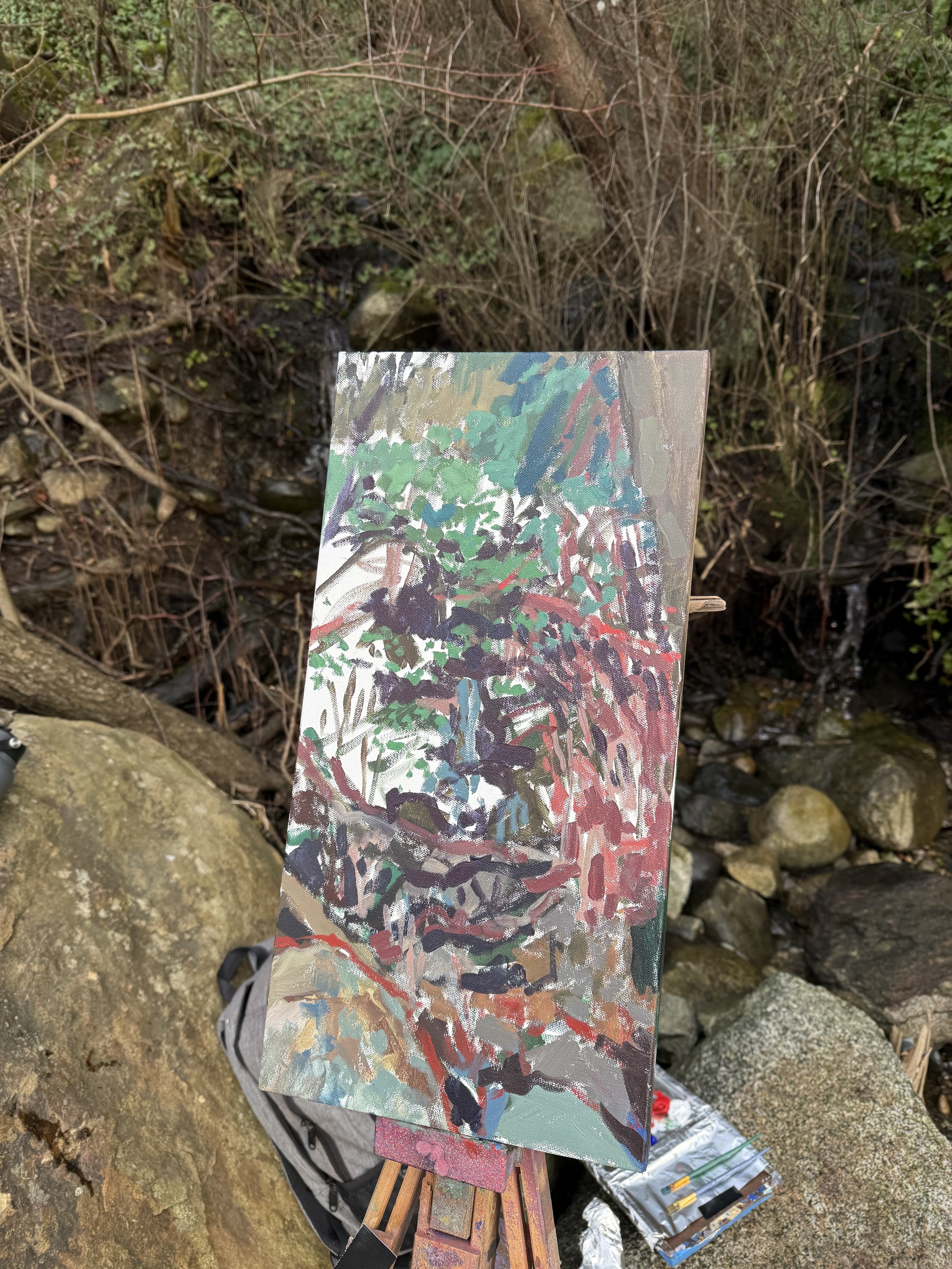
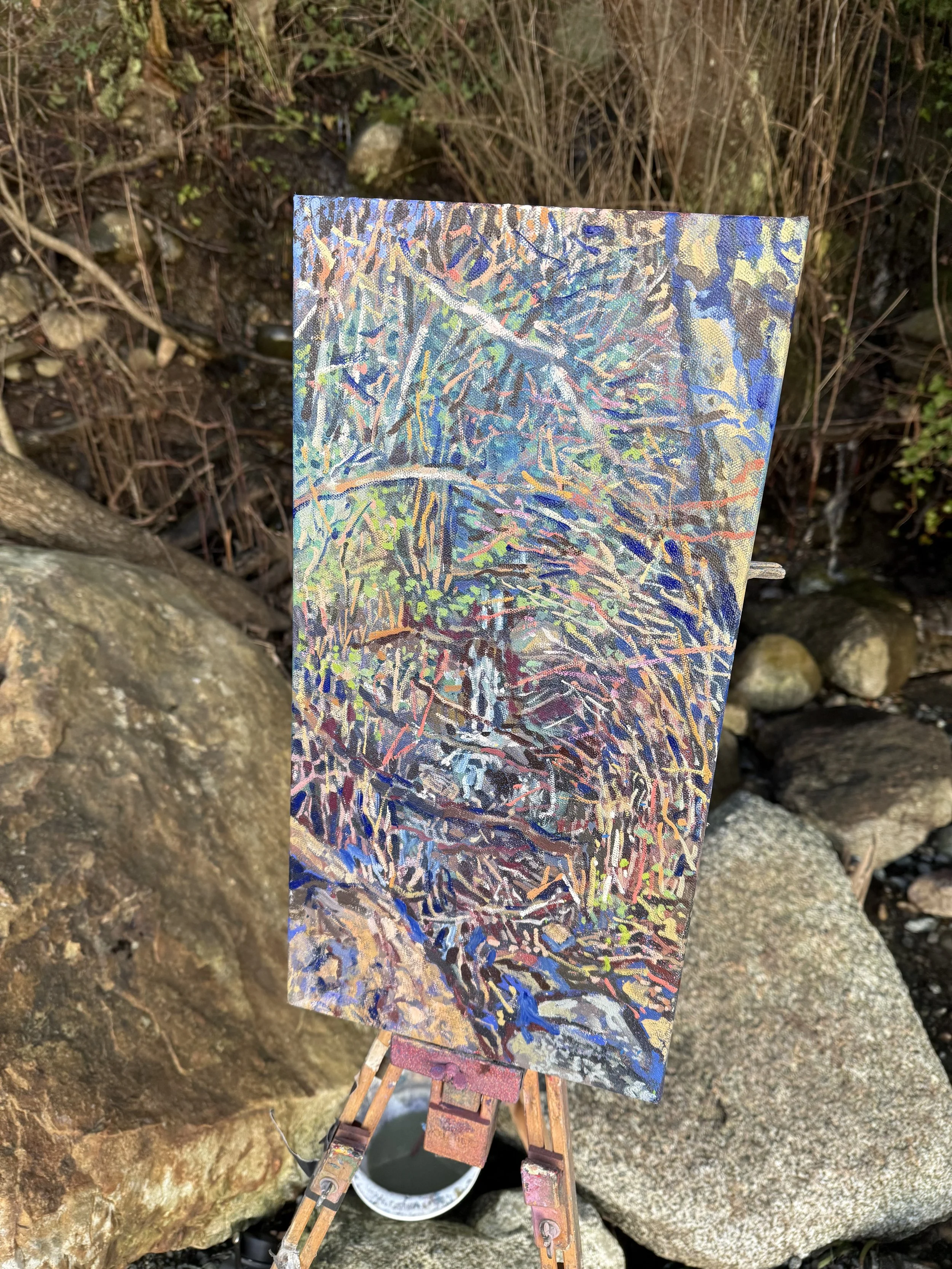
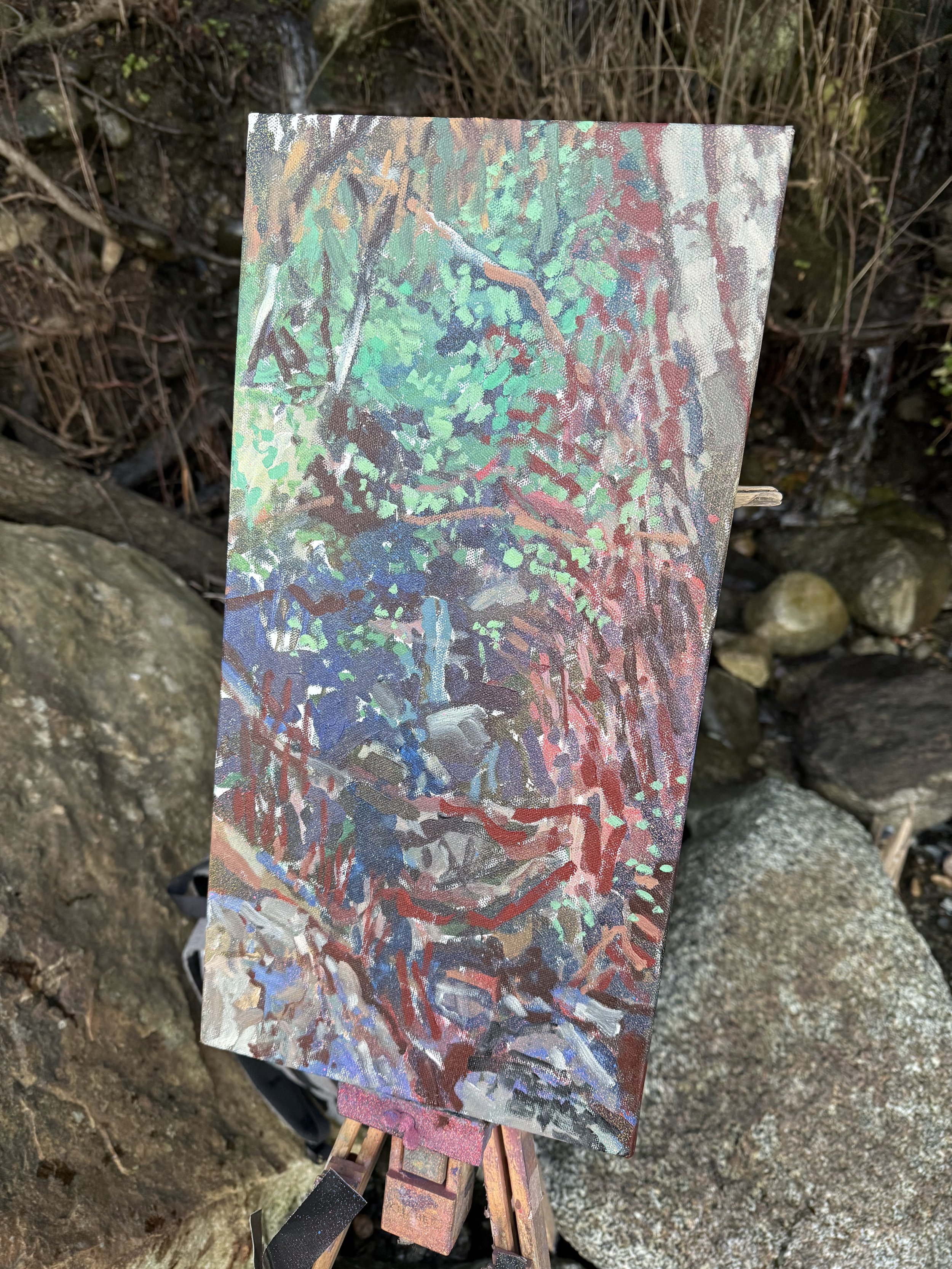
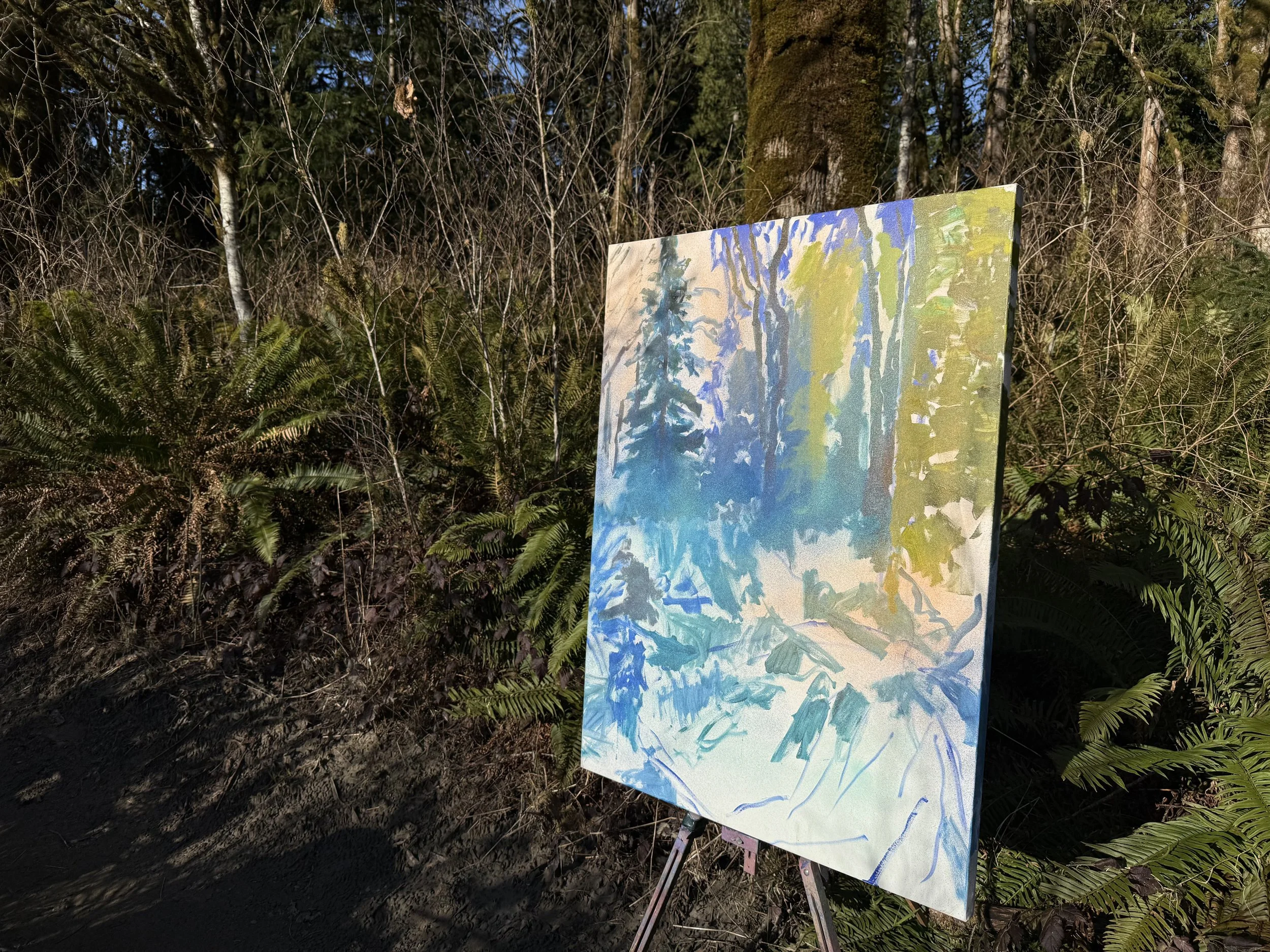
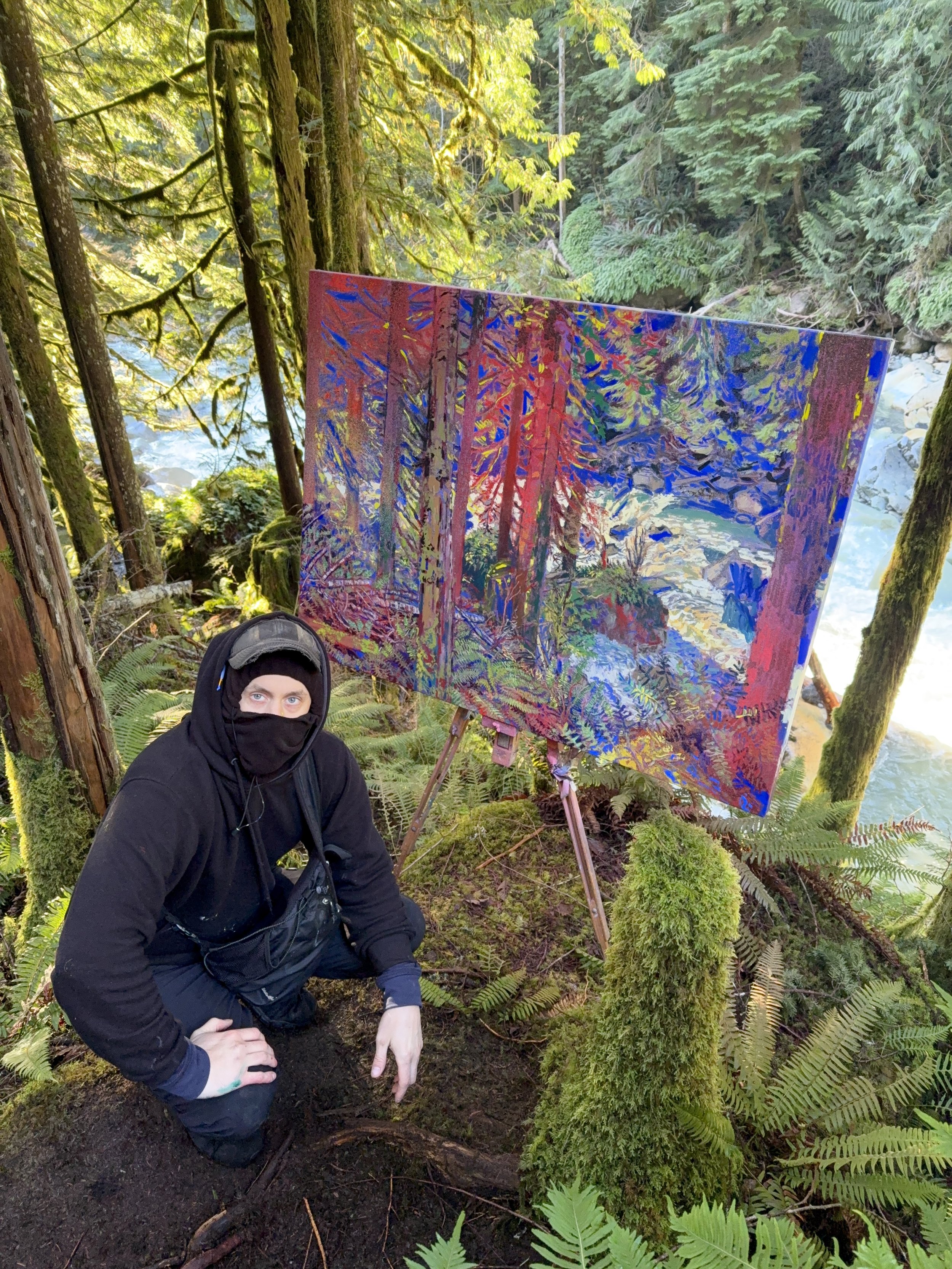
Clearwater Creek, Skagit Valley, Washington
3 × 4 ft · Acrylic and Spray Paint on Canvas
This was my first major winter painting in nearly a year. A true labor of love, winter demands an incredible amount from both the artist and the gear. However, the payoff is an enriching environment filled with electric blues and a reflective atmosphere shaped by condensation—especially while painting on a river.
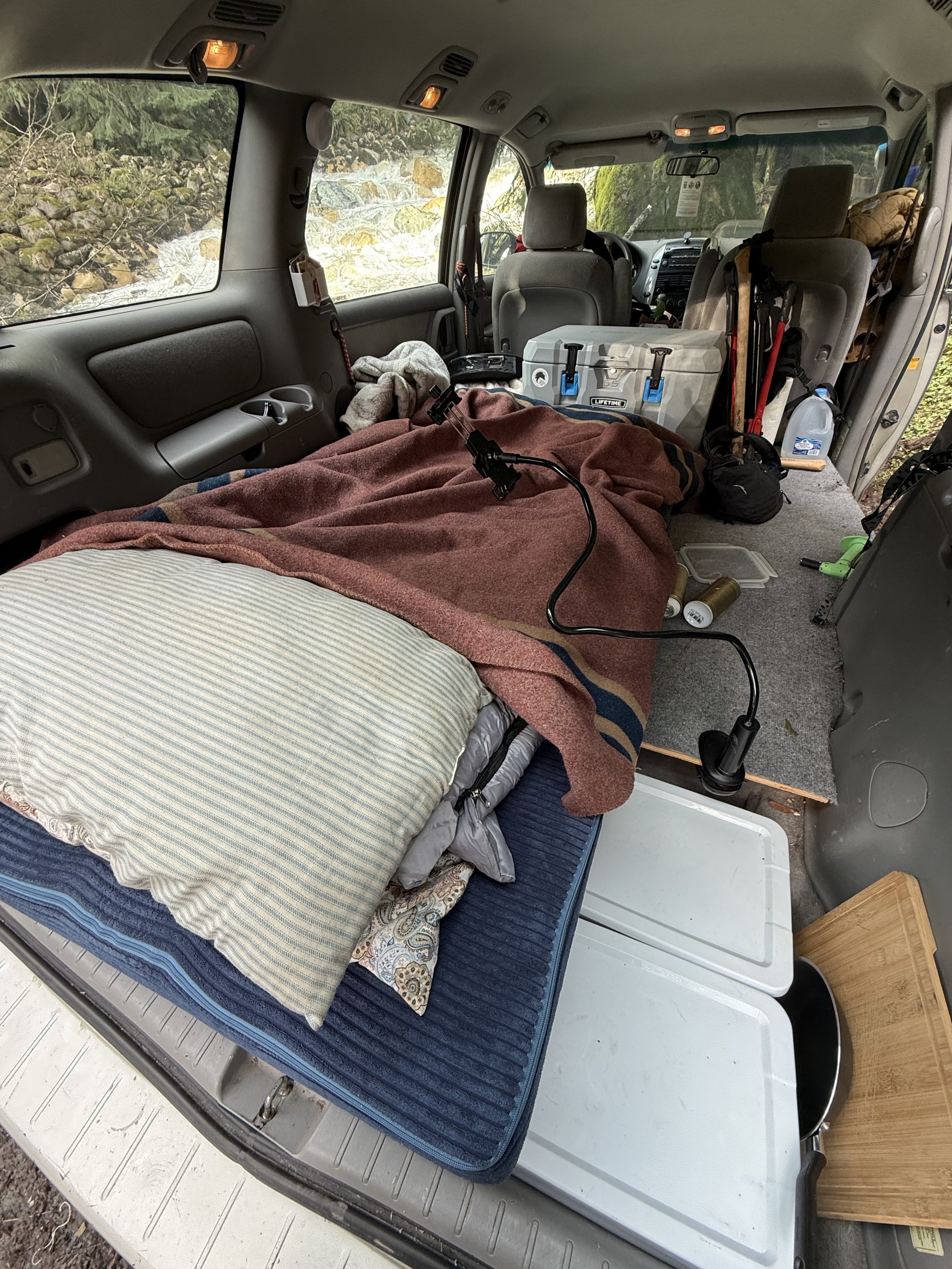
The environment was filled with a constant mist and the roar of water. Due to the rugged terrain, my vehicle—which serves as my sleeping quarters—had to be parked on a serious incline, as it was the only way to access the location. It was unfortunate to find a disgusting amount of garbage left by previous campers; while this spot is special, it is clearly better suited for summer or spring camping, given the numerous fire pits and tent sites.
The temperature was incredibly cold. My new sleeping bag, balaclava, and toe-warmer inserts made a world of difference, though waking up in a freezing environment is always a harsh reality. Ultimately, nearly everything besides the actual painting is a struggle, verging on dangerous.
The Winter Process
Painting during the winter, specifically by a river, is a game-changer. The mist and damp air keep my acrylic paints and spray-paint layers much looser, allowing me to blend delicate lighting effects with hard details by pulling various layers forward and backward.
Heating the painting inside the car at the end of the day is necessary to "lock in" the work. I am still gaining experience with these specific conditions and the interplay between spray paint and acrylics; there is so much room to grow with these two mediums. While I’m eager to do more large-scale winter pieces, the process is costly and, honestly, quite grueling. I suppose the added benefit of this lifestyle is the sense of revival I feel—the more I have to give to the environment, the more I receive from the work.
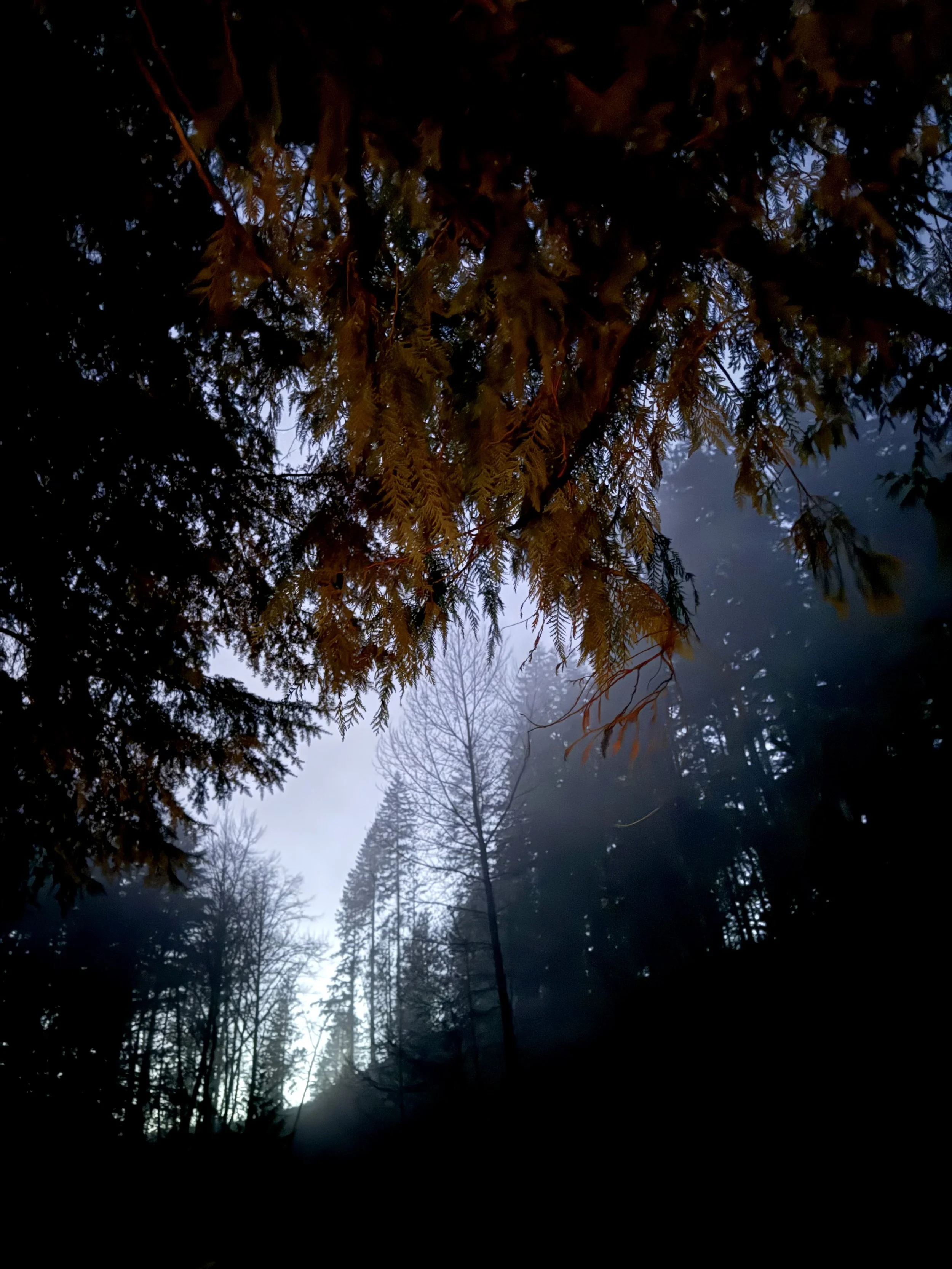
La Conner, Skagit Valley, Washington
1 x 2 ft · Acrylic and Spray Paint on Canvas
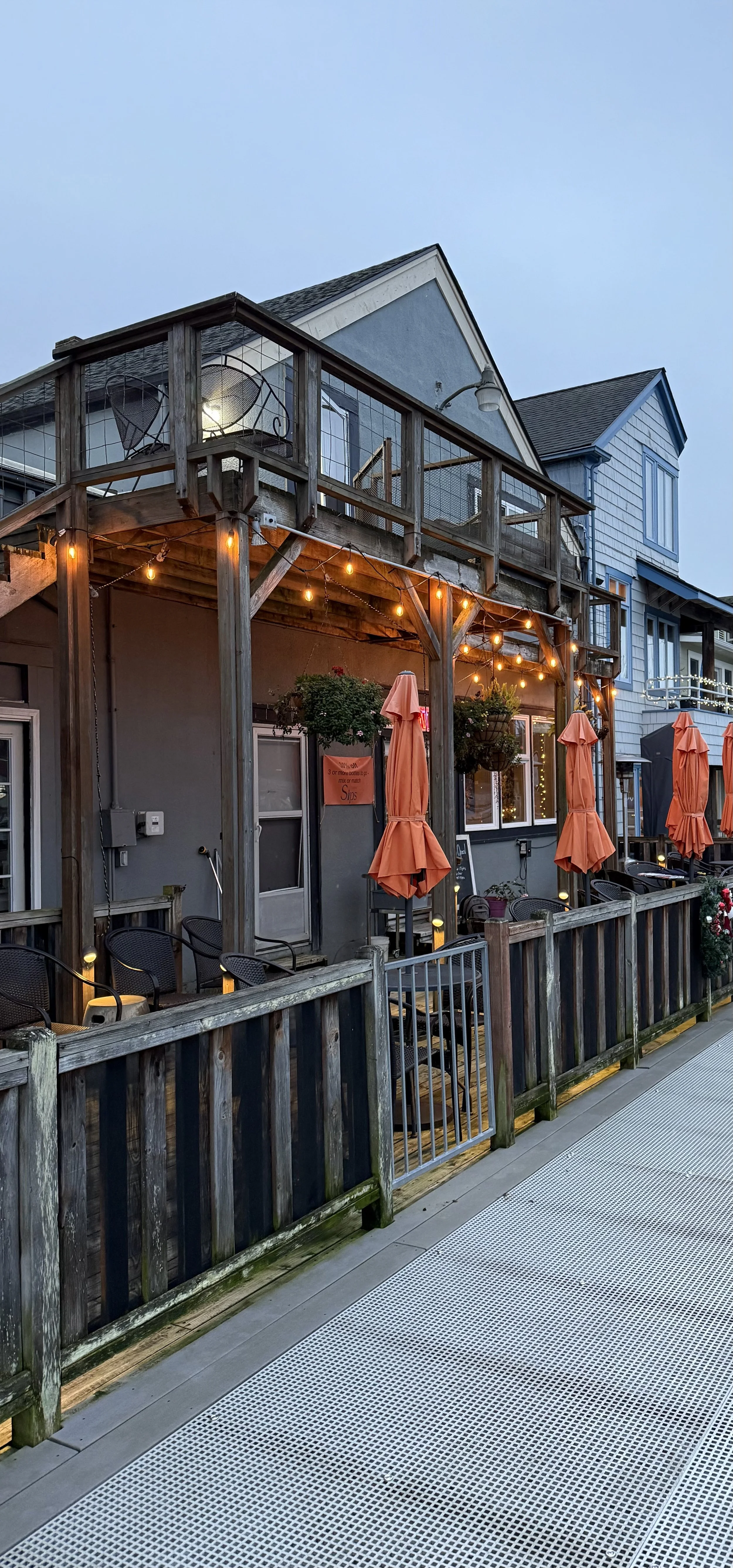
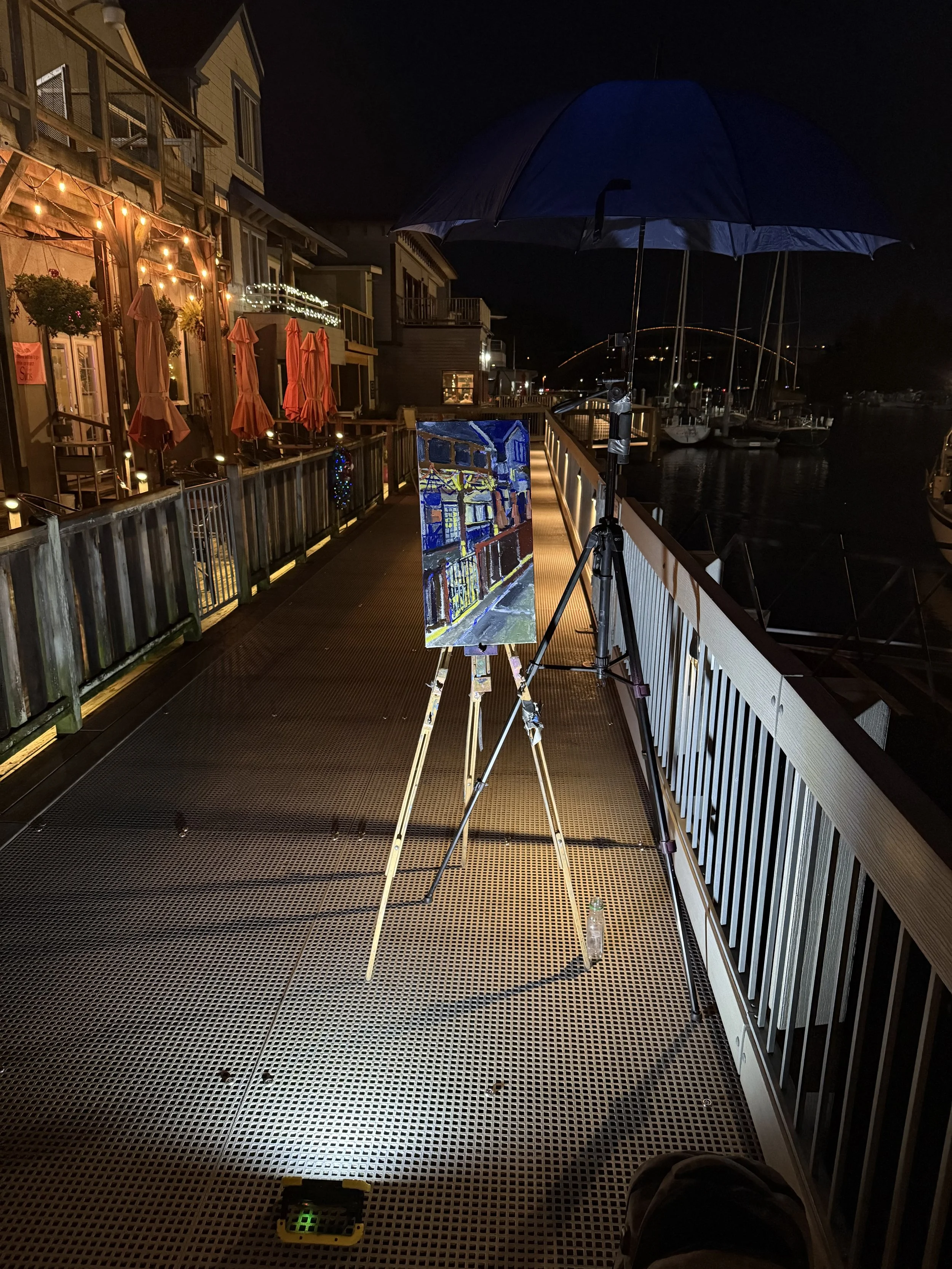
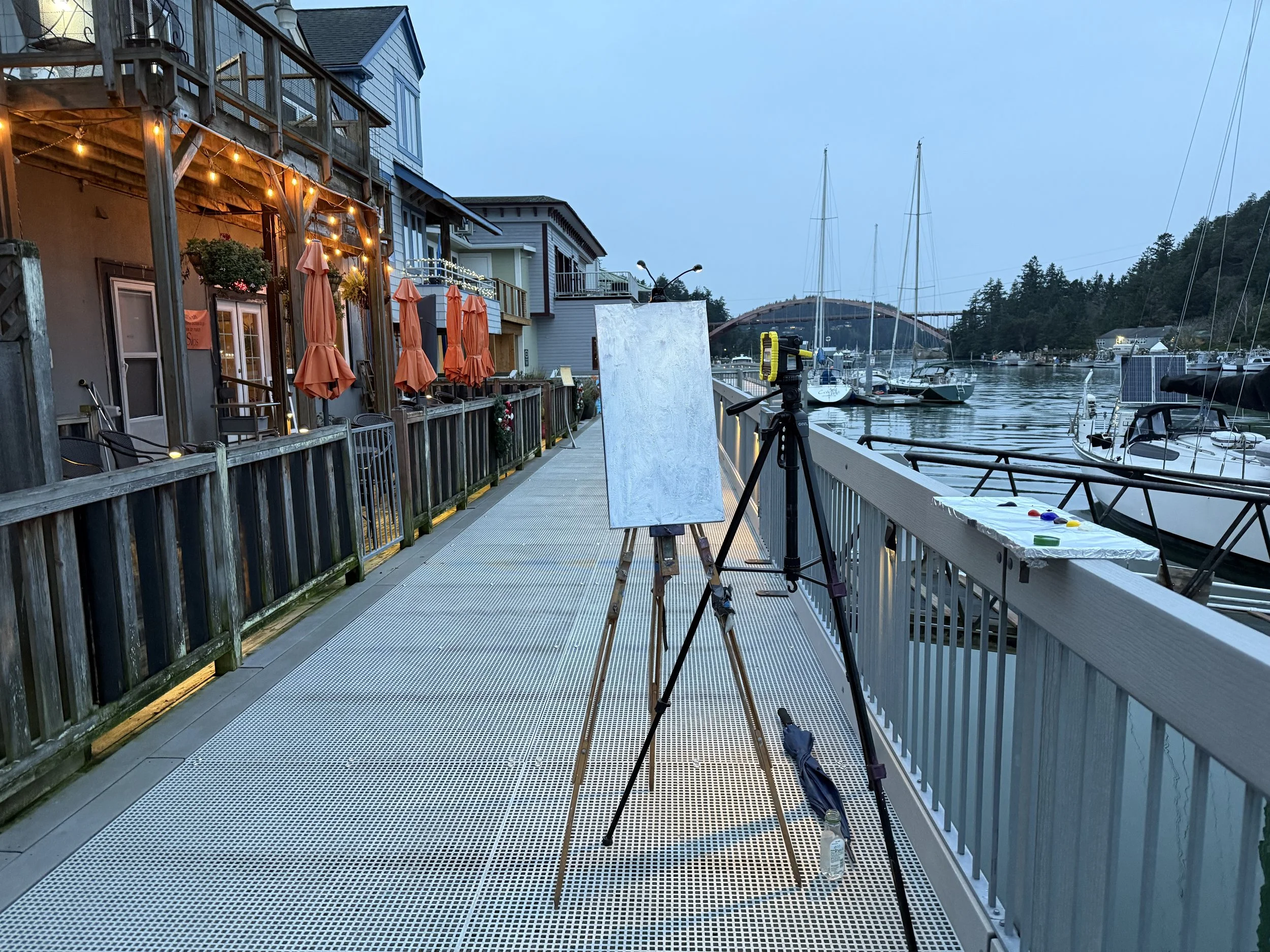
I recently completed this night-time plein air piece in La Conner. I began about 45 minutes before sunset, which allowed me to quickly block in the composition before the light faded. Once it was dark, I used a large LED light on a tripod to illuminate the canvas and my palette as I worked.
Having painted in La Conner many times, I approached this piece as much for the community connection as for the art itself. La Conner has a fantastic art community and many dedicated supporters; it’s always a pleasure to engage with the people there while working on-site.
-SOLD
Little Mountain, Skagit Valley, Washington
3 × 4 ft · Acrylic and Spray Paint on Canvas
My recent and current work is a continuation of the themes from my previous two pieces: taking a complex, multilayered slice of nature and distilling it into a digestible snippet. Currently, I am battling early sunsets, colder temperatures, and very unreliable light. While the sun officially sets at 4:40 PM, it gets dark in the woods much earlier. Combined with the low-light, detailed subject matter, working within these restraints is a frustrating challenge.
Day Two Update: I will need one additional session to complete this piece. While I am not fully satisfied with it yet, I plan to see the work through to the end regardless.
-SOLD
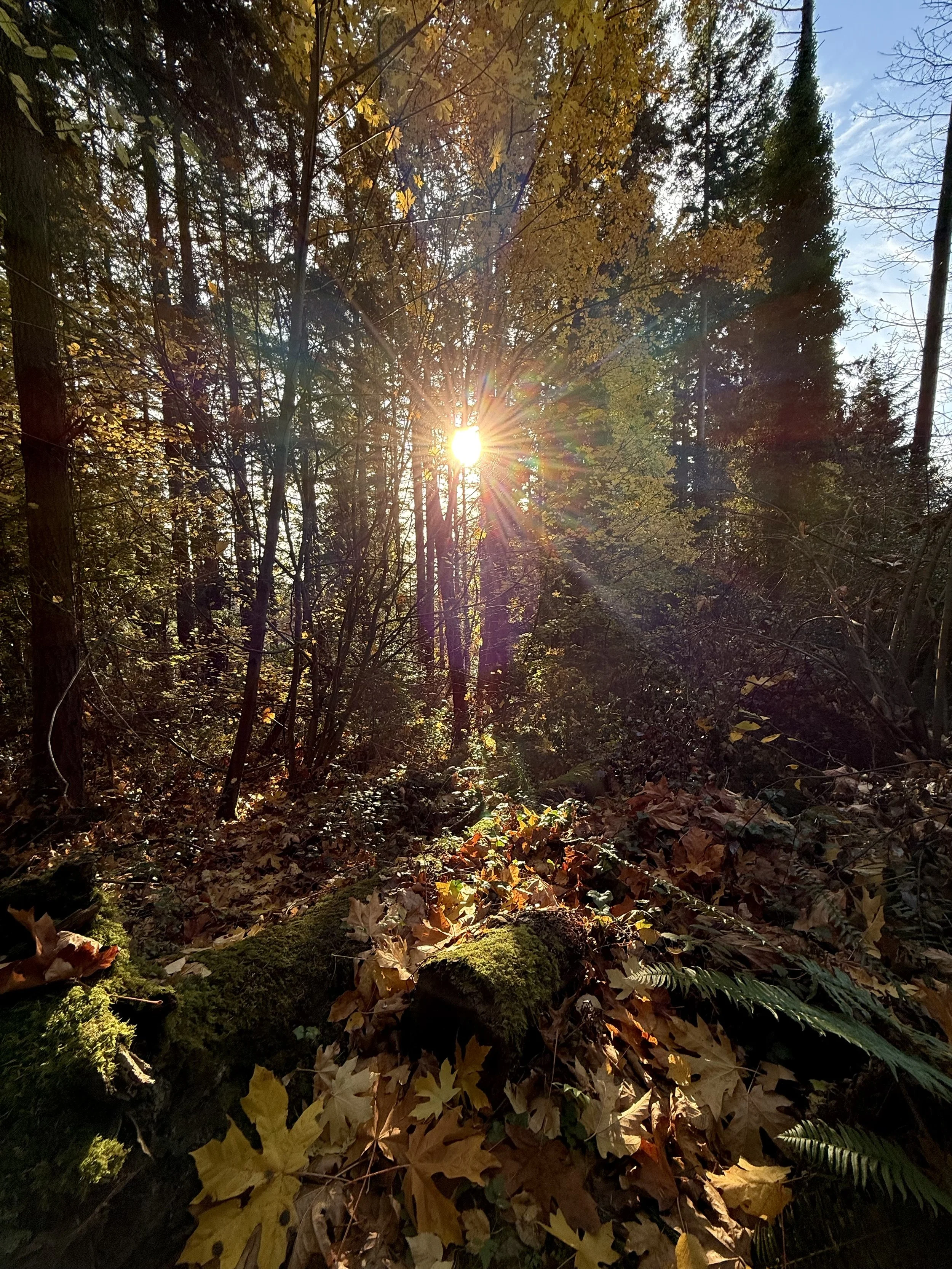
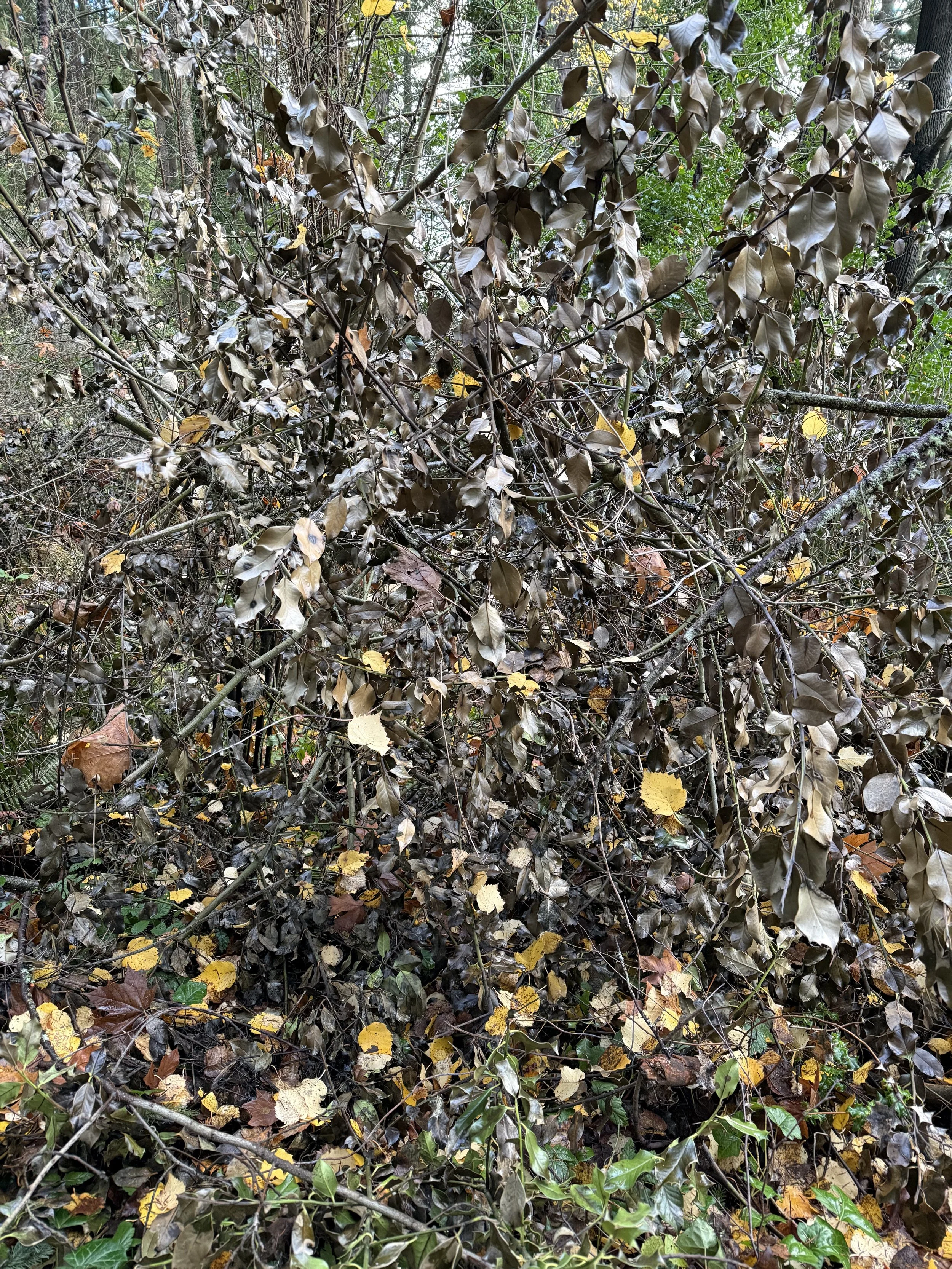
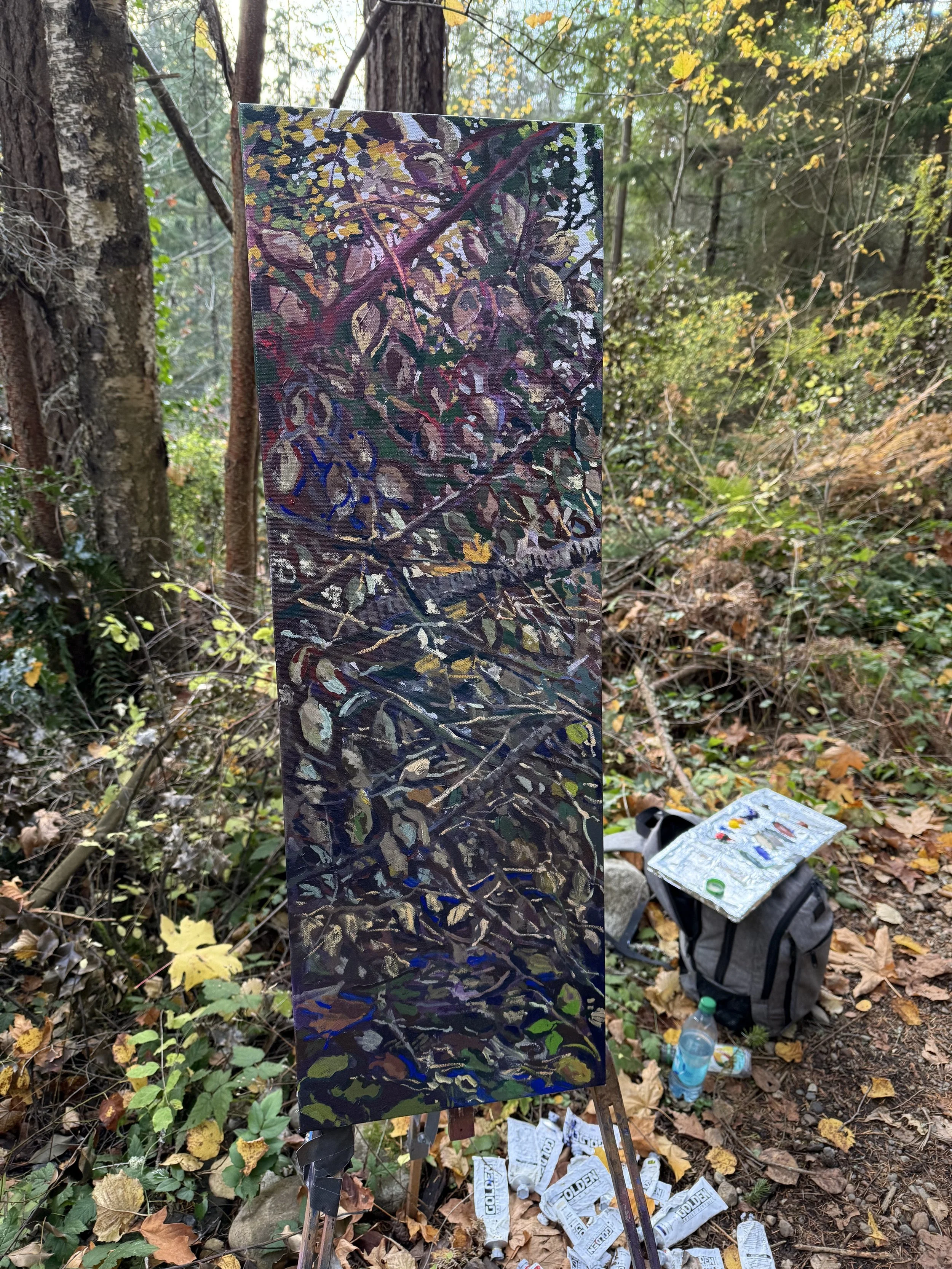
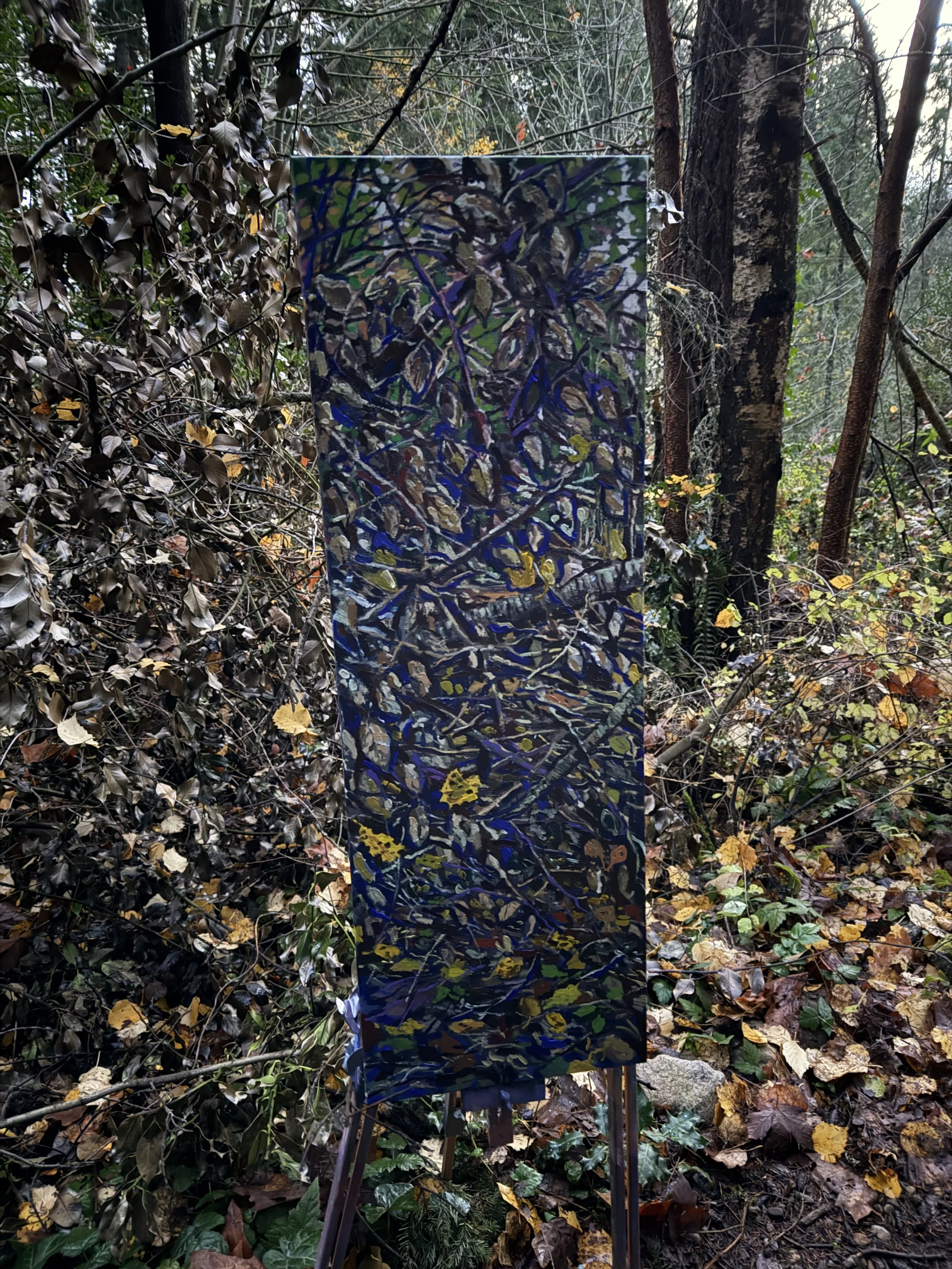
Update: I am returning to this location for a third week due to recent bad weather. A major storm moved through this past week, blowing off the majority of the remaining leaves. Interestingly, someone had also leaf-blown the pathways clean, which pushed entirely new textures and colors onto my subject matter. The leaves have dried further, shifting into a more ochre-grey tone. This is exactly the kind of parallel I love in my work: I am painting nature, but it is being affected by human intervention in a visible, tangible way.
Padilla Bay, Skagit Valley, Washington
10 x 20 inch · Acrylic and Spray Paint on Canvas
Completed at the Padilla Bay Upland Trail in acrylic and spray paint, this piece further explores texture-based subject matter from a close-up point of view. Focusing on the small details that compose these larger natural shapes—with multiple types of plants intertwining and intersecting—provides the perfect opportunity to highlight my layering techniques. I used color, shape, and the opaque qualities of spray paint to play with the viewer's sense of depth, blurring the lines between what is close up and what is further back.
-SOLD
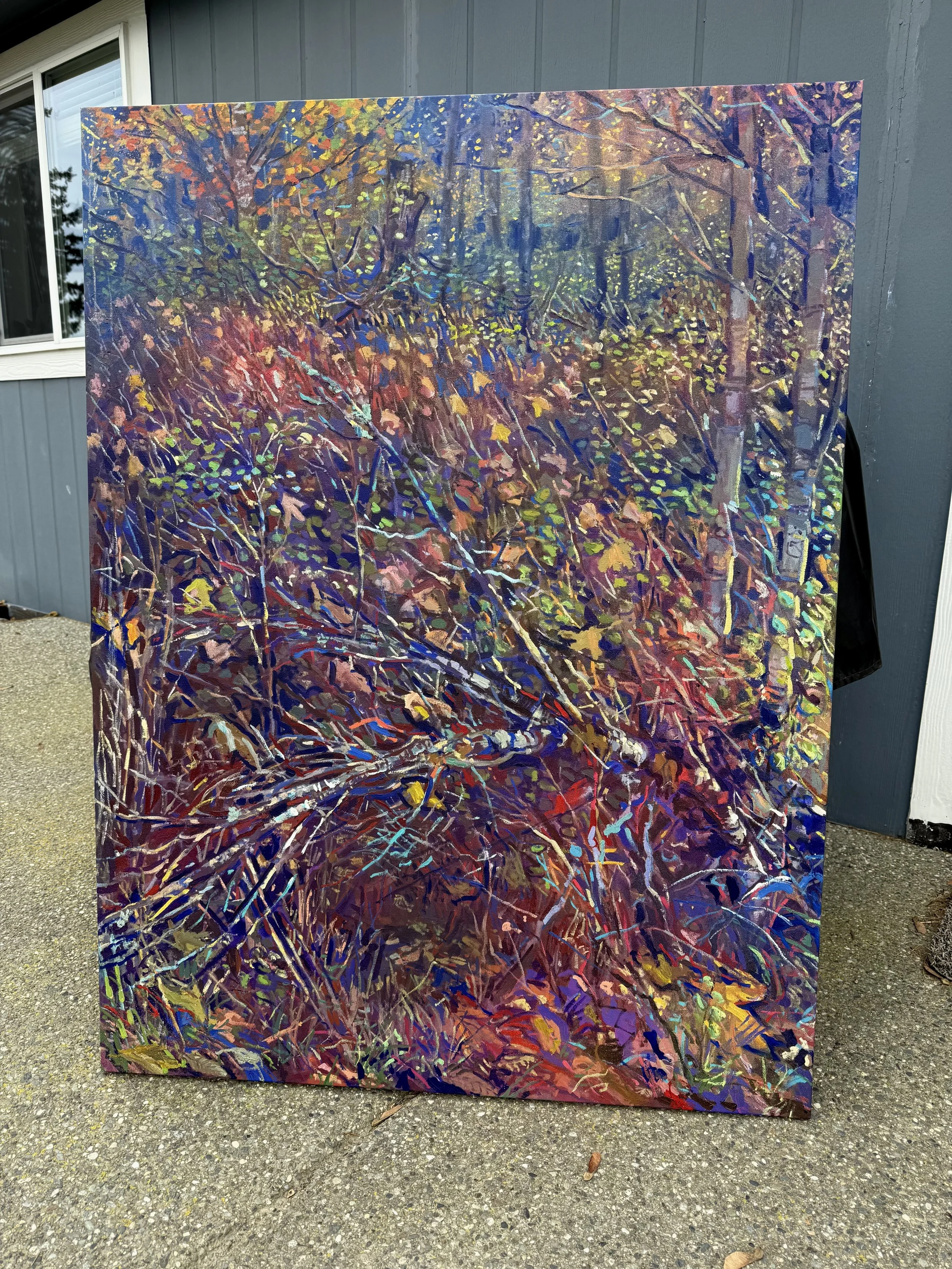
Rasar Park, Skagit Valley, Washington
3 × 4 ft · Acrylic and Spray Paint on Canvas
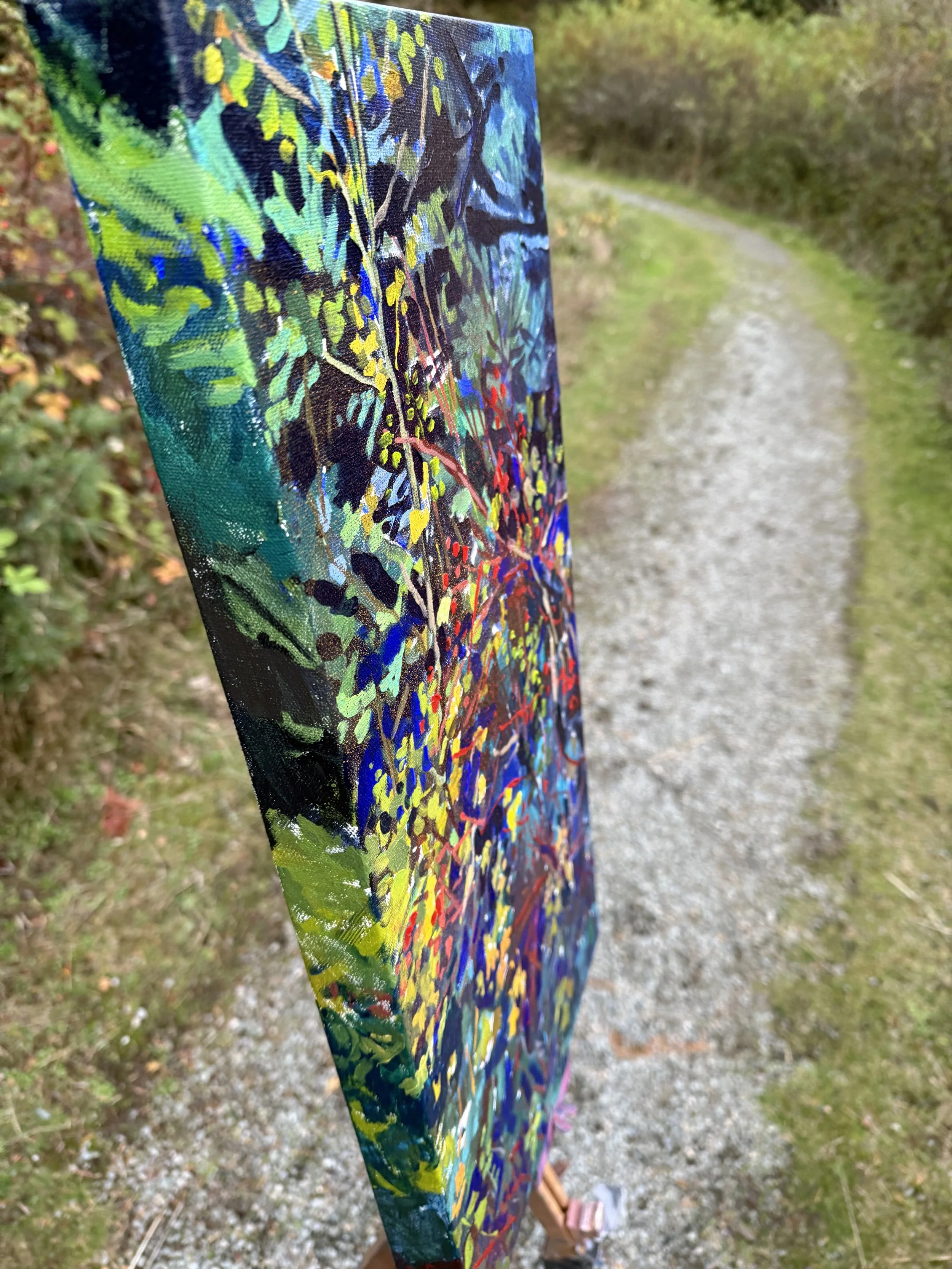
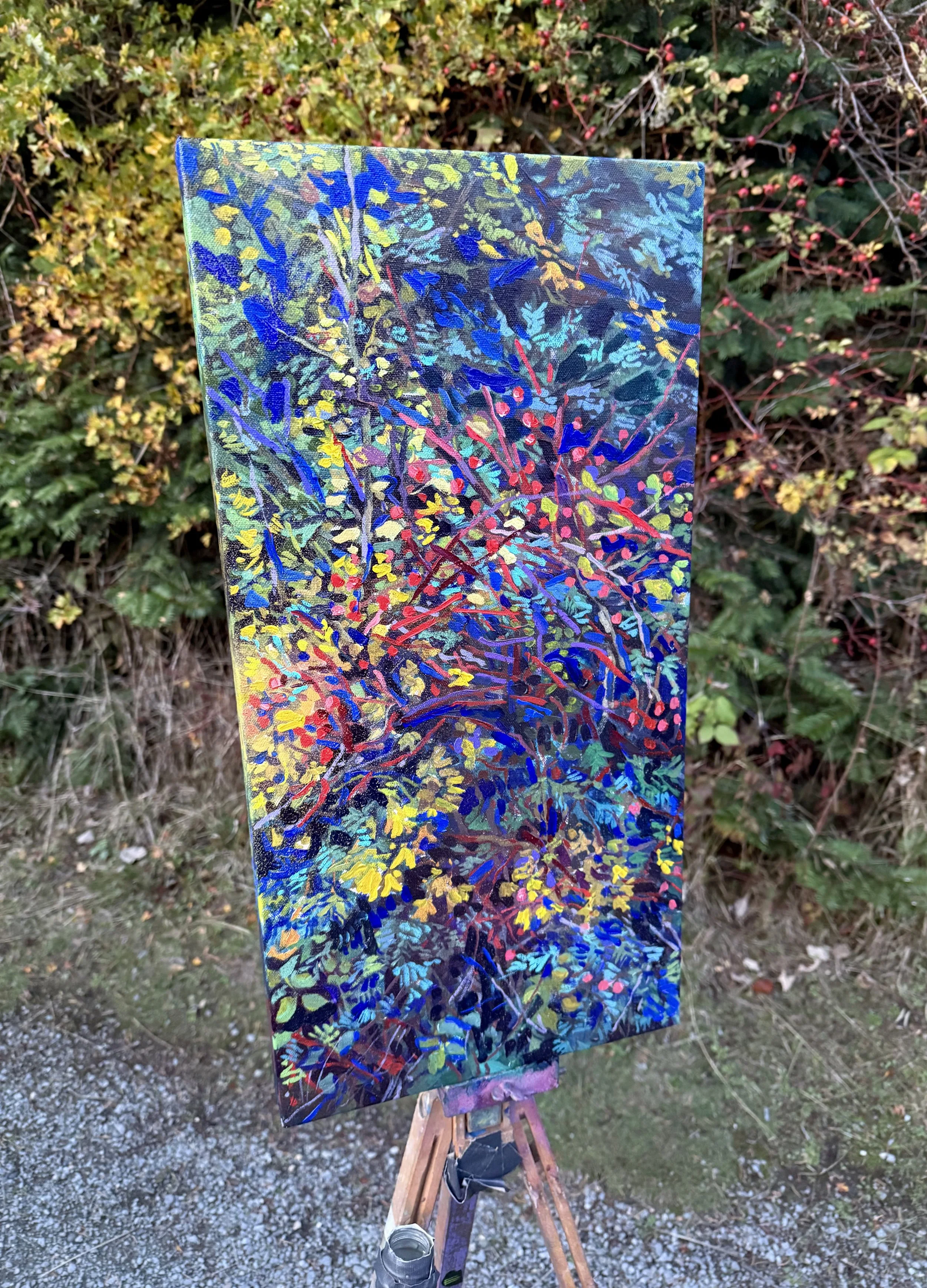
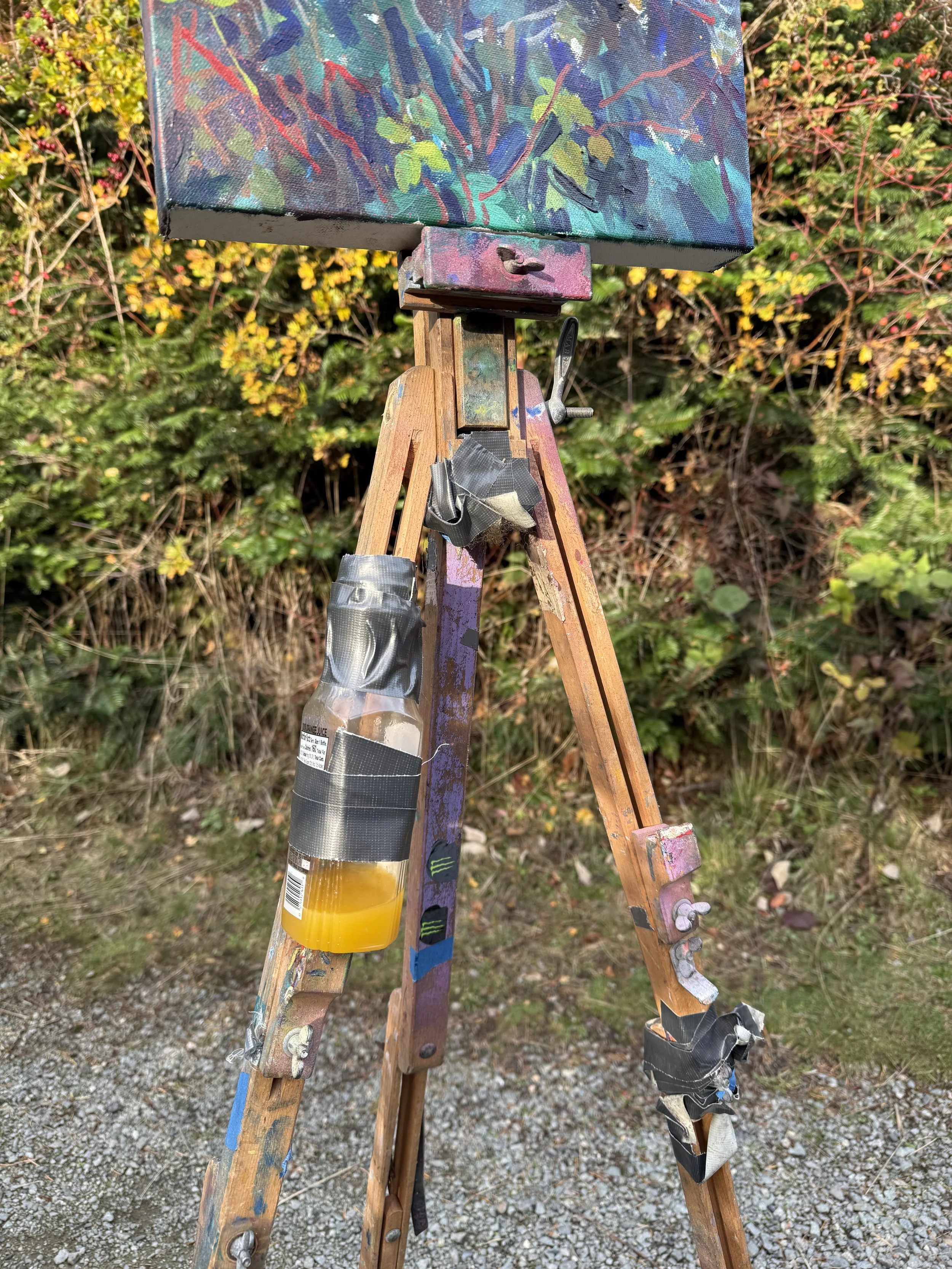
Completed at Rasar State Park over five days, this multimedia piece in acrylic and spray paint was aimed at capturing the specific textures and colors of autumn. This shift in subject matter is a direct response to being too restrictive with my previous work. I had been trying to paint water, rivers, and streams exclusively, but given the seasonal restrictions and location availability, I decided to focus on this tightly packed texture.
I have realized that everything is worth painting, and that creating work consistently is more important than waiting for the "perfect" subject. This is a series I plan to continue through the different seasons; it tells a story of the local environment and the passing of time while allowing me to experiment with technique and scale. Because this subject matter is more accessible, it will be a perfect focus for my large-scale winter sessions.
For this location, I chose to drive out each day. While this was cheaper in some respects, a two-hour commute is a lot of extra work, and it definitely affects the creative process. I much prefer staying on-site; to live inside your subject matter rather than just visiting it creates a completely different energy and vibe in the work.